
Importing Pet Supplements into South Africa: What Buyers Should Prepare
26th November 2026
 admin
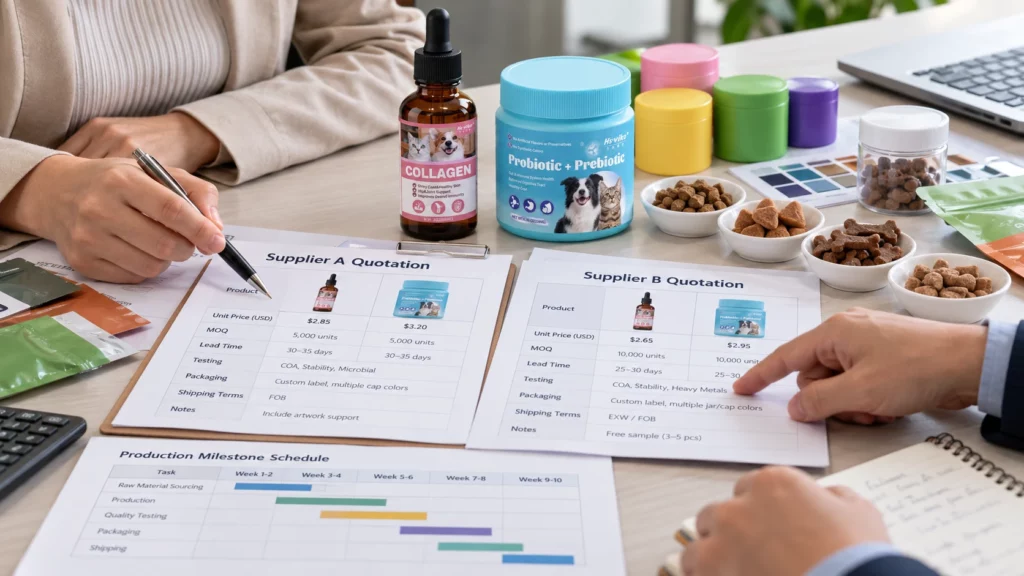
Choosing between a pet supplement manufacturer in China and one in the United States is not a simple country-versus-country price decision. The useful comparison is between two written offers for the same formula, dosage form, packaging, quality checks, order quantity, shipping terms, and delivery destination. A lower factory quote can change once setup charges, freight, duties, testing, and inventory are included. Compare the assumptions line by line before choosing a supplier.
A manufacturer’s location can affect freight routes, customs work, communication hours, and travel for audits. It does not tell you what one particular supplier can make, how much it will cost, or how quickly your order will arrive. Those answers depend on the facility, product specification, production schedule, sourcing needs, and commercial terms. Avoid using national averages or a headline unit price as a substitute for a product-specific quote.
Before requesting bids, define the same target for each supplier: animal species, intended product use, active ingredients and amounts, serving size, flavor, dosage form, pack count, packaging materials, label status, annual forecast, first-order quantity, and delivery address. Mark which items are fixed and which may be proposed. If the brief changes between suppliers, the resulting quotes are not directly comparable.
Ask every manufacturer to separate one-time development and setup fees from recurring production costs. The quote should identify formula or sample work, ingredients, conversion or filling, primary packaging, labels and cartons, testing, release documentation, and any charges for artwork changes or tooling. Request unit prices at the same quantity tiers, stated in the same currency, with the same payment and validity period.
Calculate the cost to have saleable goods at the destination. Depending on delivery terms, include freight, insurance, customs brokerage, duties or taxes, handling, inland transport, and storage. For a U.S. destination, confirm who handles import entry and pays each charge; ask a customs professional to verify product-specific tariff classification.
Compare cost per finished, saleable unit after excluding samples, rejects, overage, and units reserved for testing. Check whether release documents, freight, packaging, and testing are included, and whether reorders use the same assumptions. To model a first run, compare a pilot, the quoted minimum, and a realistic reorder, including cash tied up in unused packaging or ingredients. The Pet Supplement MOQ guide explains how format, formula, and packaging affect a minimum.
A minimum order quantity is meaningful only when the supplier states its basis. Confirm whether it applies per formula, flavor, strength, species, pack size, label version, batch, or order value. Ask whether finished product and packaging have separate minimums; one standard configuration may not cover multiple flavors or language versions.
Ask what creates the minimum: batch size, ingredient purchase units, line setup, changeover, printed packaging, or testing. Request a quote for the same first-run quantity from each supplier. If it cannot be met, ask whether standard packaging, fewer SKUs, a reference formula, or a later reorder schedule changes the economics without reducing agreed product or release requirements.
The lowest MOQ is not always the best fit. A small batch may cost more per unit or leave too little inventory for a sales test; a large batch may tie up cash and increase storage or expiry exposure. Compare each offer with expected sell-through and replenishment needs, not with a public minimum for a different product or scope.
Ask for dated milestones covering brief and formula approval, sample review, ingredient and packaging procurement, production, quality release, dispatch, and delivery. Confirm which steps can overlap and whether the first order differs from a repeat order because artwork or materials are not yet approved.
Add the planned transport mode, route, customs processing, and last-mile delivery to an overseas schedule. For a domestic order, confirm production queue, carrier pickup, and delivery to the same address. Ask what event starts the clock, such as approved artwork or receipt of a deposit, and request assumptions behind the estimate.
Ask how delays, partial shipments, late ingredients, sample revisions, or quality holds will be handled. HSVIKO’s manufacturing process guide describes handoffs from brief and sample through release and packing, which helps buyers request a milestone schedule.
Customization may mean private labeling an existing formula, adjusting a reference formula, developing a blend, changing flavor or serving size, selecting a dosage form, or creating new packaging and artwork. Ask what is included, which fees are separate, how many review rounds apply, what files and specifications you receive, and who owns formula records, artwork, tooling, and unused materials if the project stops.
The product format changes the work to evaluate. HSVIKO’s product catalog lists soft chews, tablets, pastes, capsules, liquids, and powders. Ask each manufacturer to confirm the exact dosage form and pack configuration quoted; a general capability statement does not establish fit for every SKU.
Ask for project-relevant evidence such as sample criteria, ingredient specifications, batch records, release tests, stability approach, traceability, and change control. A polished presentation or general research claim does not establish that a supplier can make your exact formula.
Put the destination market and sales channel in the brief. Agree who reviews ingredient suitability, directions, warnings, and artwork, and which checks require independent review. HSVIKO describes OEM/ODM services for pet nutrition products; review its OEM/ODM program and verify its proposed format, formula path, testing, and packaging against the same brief used for other candidates.
Use one scorecard with fields for the answer, supporting evidence, open questions, and follow-up owner. Record for each offer:
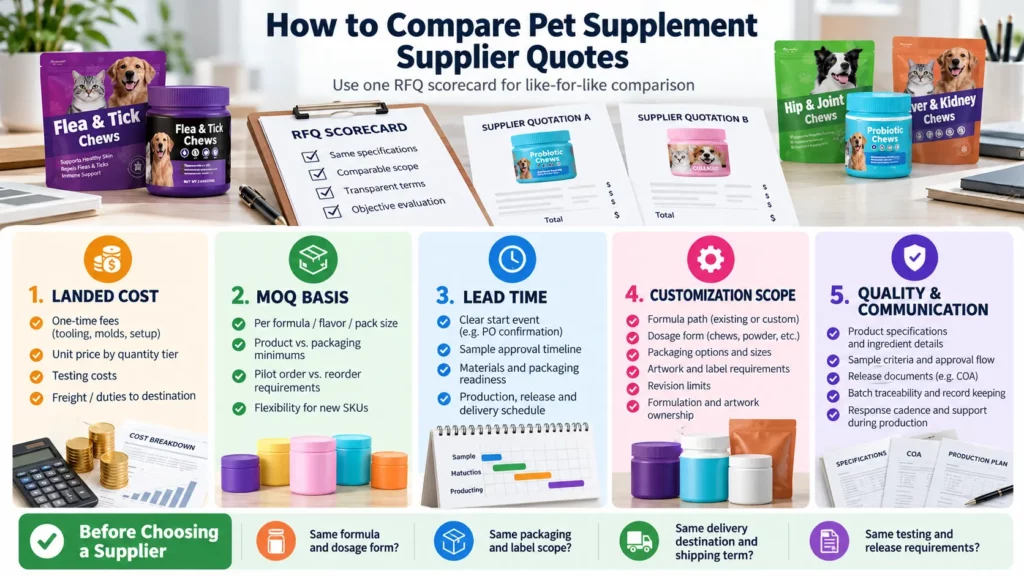
Score offers only after the same questions are answered. Weight criteria to the project: a first launch may value pilot flexibility and documentation, while a repeat program may prioritize replenishment and stable specifications. Treat critical quality or label documents as pass-or-fail requirements.
Before ordering, reconcile the quote, specification, formula version, approved artwork, delivery terms, payment milestones, and release requirements. Resolve mismatches in writing so the decision reflects the exact product and commercial risk.
China versus U.S. sourcing is best decided with two complete, like-for-like offers. Compare landed cost, SKU-level MOQ, the full production-to-delivery schedule, customization scope, and supporting quality documents. Country is context; the supplier’s written proposal and evidence determine fit. Prepare one brief and send it to every candidate so the differences are visible before approval.
No country-level rule can price a specific order. Compare the same formula, quantity, tests, packaging, delivery term, freight, duties, and destination before deciding which offer has the lower landed cost.
Confirm whether each MOQ is per formula, flavor, pack size, batch, or packaging run. Then compare the same first-order quantity and ask which setup or sourcing assumptions cause any difference.
Request a milestone schedule from approval through delivery. Compare sample work, material procurement, production, release, freight, customs, and last-mile transport rather than comparing factory production days alone.
Capabilities vary by facility and project. Ask each manufacturer to confirm the exact formula work, dosage form, packaging changes, review rounds, quality evidence, and ownership terms included in its written proposal.
For a project-specific fit check, share the target species, dosage form, formula status, packaging, first-run quantity, destination, and required documents when you contact HSVIKO about its OEM/ODM scope.
Related Posts
Importing Pet Supplements into South Africa: What Buyers Should Prepare
26th November 2026
How to Plan a Private Label Pet Supplement Manufacturing Timeline
20th November 2026






Contact Us