
Importing Pet Supplements into South Africa: What Buyers Should Prepare
26th November 2026
 admin
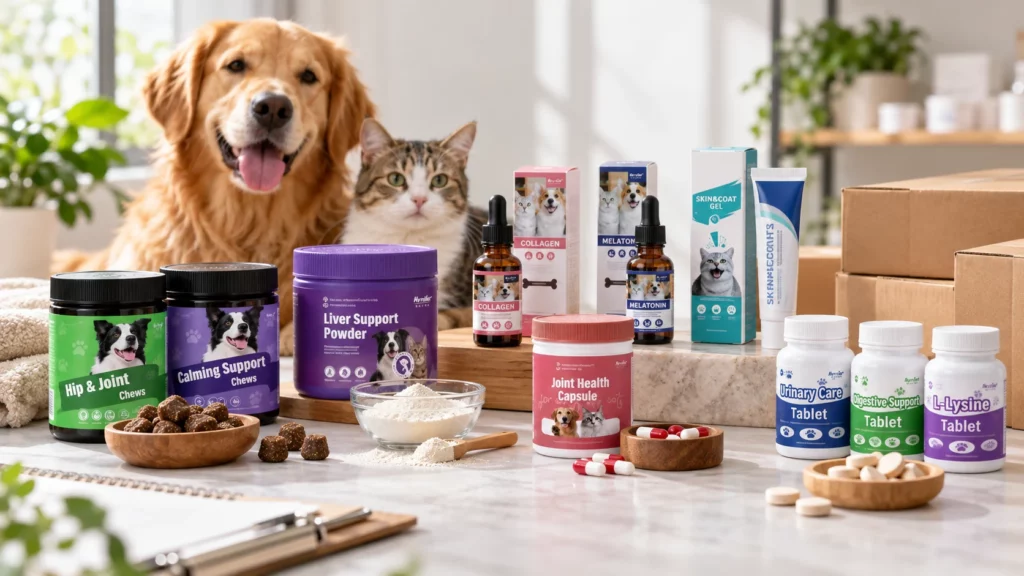
Contract manufacturing lets a pet supplement brand outsource formulation, production, packaging, or selected technical work to a qualified manufacturing partner. The right arrangement can shorten the path from product idea to finished goods, but the result depends on how clearly the brand defines the formula, dosage form, market requirements, ownership, quality controls, and commercial assumptions. This guide explains what to evaluate before signing a contract manufacturing agreement.
Start by reviewing the manufacturer’s pet supplement product range to understand which formats may fit your concept. Then turn that concept into a written brief that a supplier can quote, sample, test, and reproduce.
Contract manufacturing is a business relationship, not a single standardized package. Depending on the supplier and project, the scope may include ingredient sourcing, formulation support, pilot samples, batch production, filling, packaging, testing coordination, labeling support, and shipment preparation. Some brands provide a finished formula and artwork; others need help turning a product concept into a manufacturable specification.
Separate three service models when comparing proposals. Private label usually starts from an existing formula or product concept with limited changes. Custom formulation creates or adapts a formula for a defined target, dosage, and claim strategy. Full-service OEM or ODM may combine formulation, processing, packaging, and brand execution. The names vary between suppliers, so the written scope matters more than the label.
Describe the target animal, intended benefit, serving size, active ingredients, acceptable alternatives, flavor or palatability requirements, and any ingredients you will not use. If the formula is not final, identify the performance or positioning goal rather than presenting an incomplete ingredient list as fixed. A supplier needs enough information to assess sourcing, processing, testing, and packaging implications.
Avoid unsupported health promises in the initial brief. The claims that appear on a label can affect formula design, evidence requirements, review steps, and the markets in which the product can be sold. Ask the manufacturer to identify which parts of the brief require regulatory or technical confirmation before artwork is finalized.
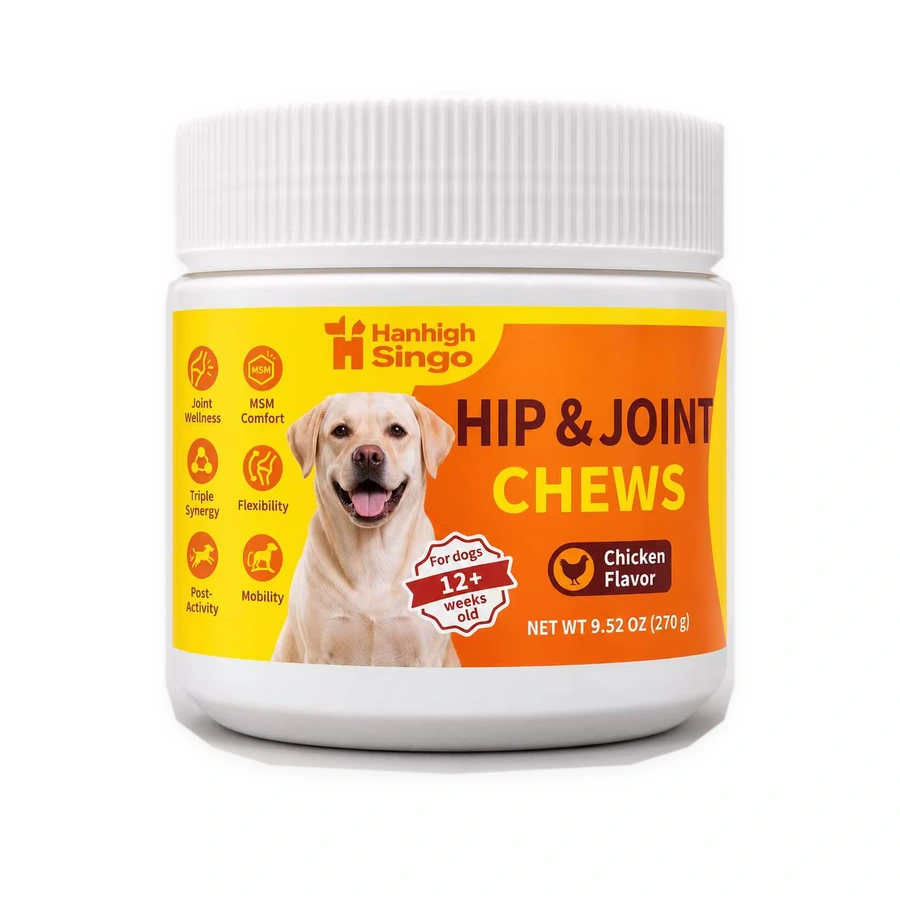
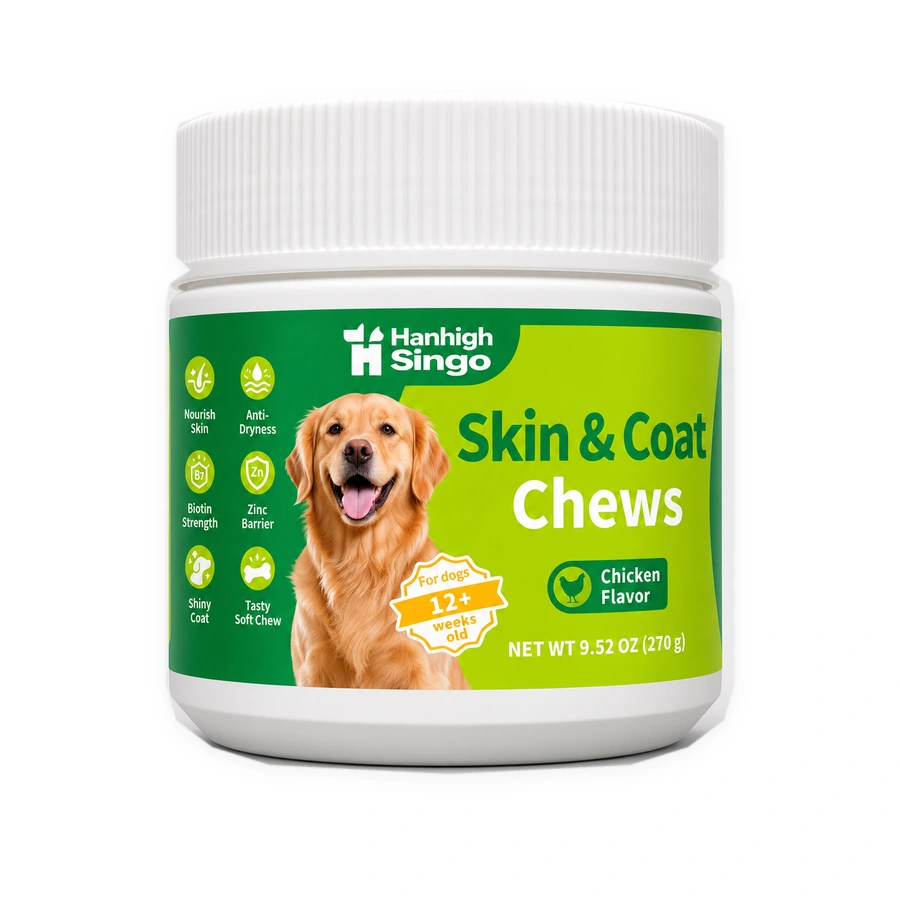
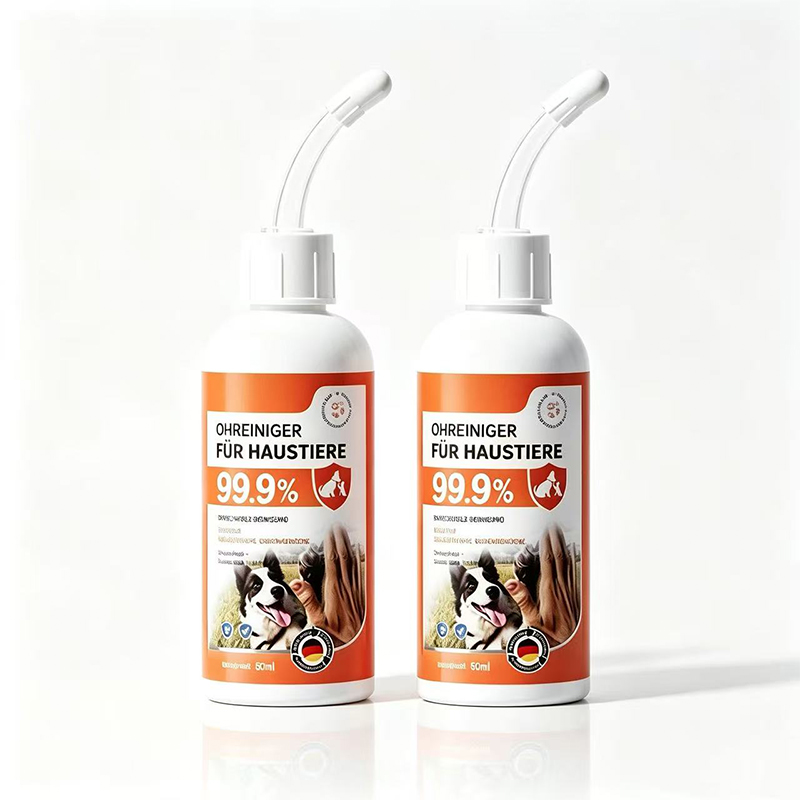
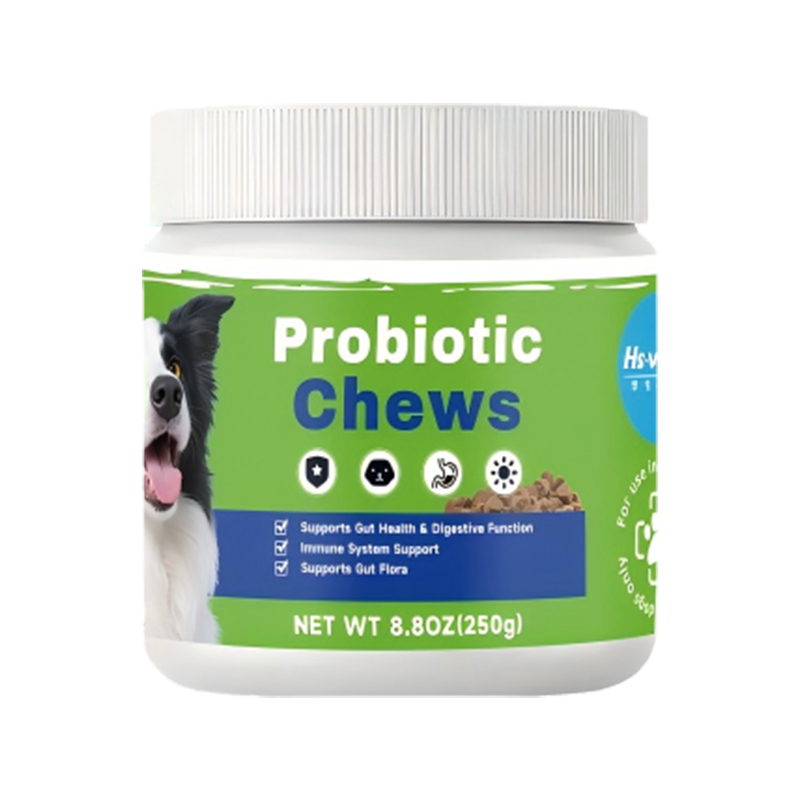
The supplied catalog shows a broad set of pet supplement formats, including chews, powders, drops, gels, emulsified products, fish oil, teeth-cleaning water, capsules, tablets, and small-pet premixes. A format choice affects mixing, filling, sealing, stability, serving instructions, and the physical package. Decide whether the concept is best expressed as a soft chew, powder, liquid, capsule, tablet, or another format before comparing unit prices.
Specify net weight or count per pack, container or pouch type, closure, label dimensions, language panels, tamper features, and whether stock or custom packaging is required. Packaging decisions can influence minimum purchase quantities, setup work, freight volume, and the amount of inventory you must hold.
A professional contract manufacturing brief should describe how materials and finished batches will be controlled. Ask what ingredient specifications and supplier documents are required, how incoming materials are checked, what in-process records are maintained, and which finished-product tests are included or available. The exact controls depend on the formula, dosage form, destination market, and agreed specification.
Clarify the document package you will receive with each batch. Depending on the project, this may include a certificate or test report, batch records, lot traceability information, retained-sample arrangements, and approved packaging or label files. Do not assume that a document is included because it is common in your market; list each requested item in the quotation and agreement.
Change control is equally important. Define who can approve an ingredient substitution, packaging change, label revision, or process adjustment. Ask how a change is communicated, whether a new sample or test is required, and how the revision is recorded. A repeat order should match the approved specification unless both parties authorize a documented change.
A contract manufacturing quote should distinguish one-time work from recurring production cost. One-time items may include formulation, samples, method or stability work, artwork setup, tooling, and initial review. Recurring items usually include ingredients, processing, packaging components, batch checks, and delivery. Some charges appear only when a design, formula, or packaging component changes.
Minimum order quantity affects cash exposure as well as unit economics. A larger run may spread setup work across more units, while a smaller run may support a market test with a higher unit cost or fewer packaging options. Request matched scenarios for a pilot quantity, first commercial run, and expected reorder. Keep the formula, pack size, label, delivery term, and testing scope constant so the comparison is meaningful.
Make sure the quotation states currency, payment milestones, delivery term, destination, freight treatment, taxes or duties, packaging ownership, and the validity period of the quote. If a cost is provisional, ask what event will convert it into a firm cost.
Evaluate capability against your actual product, not a generic company profile. Ask whether the supplier has experience with your dosage form, ingredient handling needs, pack type, intended market, and expected volume. A manufacturer that can produce many formats still needs to confirm the fit of your specific formula and specification.
Review the supplier’s development and production workflow. Hs·viko presents its business around pet food and supplement OEM/ODM services, with product formats and manufacturing capabilities shown in its public materials. Its OEM and ODM services should be treated as a starting point for a technical discussion, not a substitute for a product-specific quotation and quality agreement.
Ask for clear answers about formula ownership, confidentiality, approved substitutions, sample approval, nonconforming batches, rework or disposal, complaint handling, and recall cooperation. These questions protect the brand when a product moves from a sample into repeat production.
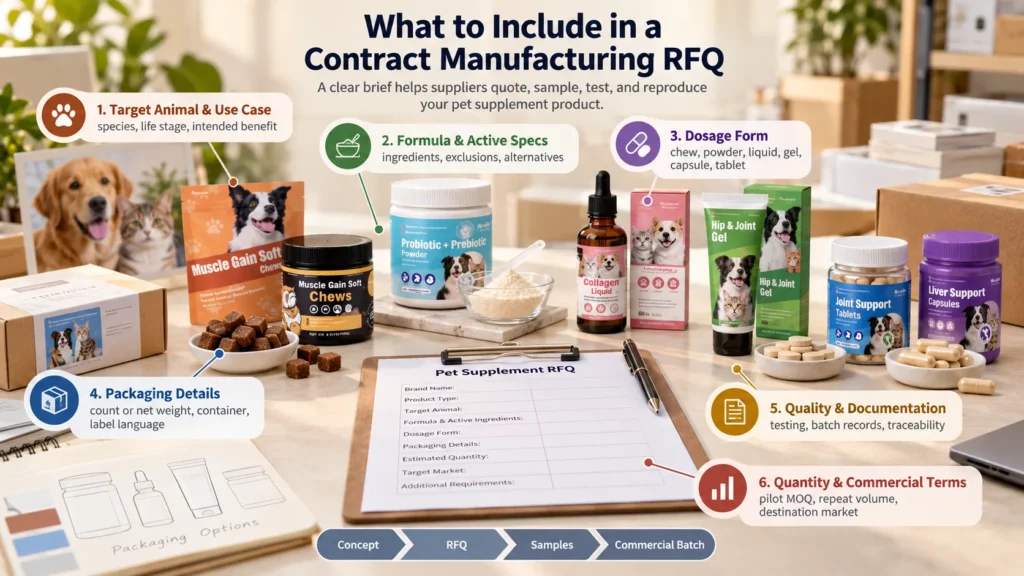
A concise RFQ helps suppliers answer the same question. Include:
For a staged project, the OEM/ODM process can help organize conversations from concept through finished product. Ask the supplier to confirm which stages are included in your proposal and which require separate approval.
Treat sample approval as a controlled milestone. Record the approved formula version, serving instructions, sensory expectations, packaging specification, label copy, and any test criteria. A sample is not automatically proof that a commercial batch will meet every requirement; the approved specification and release process must define that expectation.
Before the first commercial order, confirm the purchase order, final artwork, batch size, delivery term, required documents, and contact points for technical and commercial decisions. After launch, review the first batch against the agreed specification and document any deviation before authorizing a change. A disciplined feedback loop makes later reorders more predictable.
If you want to evaluate fit with Hs·viko, send the same product brief to its technical team and request a written scope covering formulation, production, packaging, testing, documentation, and delivery assumptions.
The strongest contract manufacturing relationship begins with a precise product brief and a transparent scope of work. Define the formula or concept, dosage form, package, market, quality documents, quantity scenarios, ownership, and change controls before comparing quotes. Then select the partner that can explain how the approved specification will be made consistently, documented clearly, and supported through repeat production.
The terms overlap. In practice, OEM or ODM may include product development and brand support, while contract manufacturing emphasizes producing to an agreed specification. Always compare the actual scope.
Some suppliers offer formulation support, while others require a finished formula. Confirm the development scope, ownership, sample rounds, testing, and approval process before work begins.
Ownership depends on the agreement. Clarify formula rights, artwork files, specifications, test records, and the rules for using or transferring project information.
Use the same formula, dosage, pack size, quantities, testing scope, delivery term, and document requirements. Separate one-time development costs from recurring batch costs.
Related Posts
Importing Pet Supplements into South Africa: What Buyers Should Prepare
26th November 2026
How to Plan a Private Label Pet Supplement Manufacturing Timeline
20th November 2026
How to Compare Pet Supplement Manufacturers in China and the United States
19th November 2026





Contact Us