
U.S. Pet Supplement Labeling: An FDA and AAFCO Guide for Brands
30th October 2026
 admin
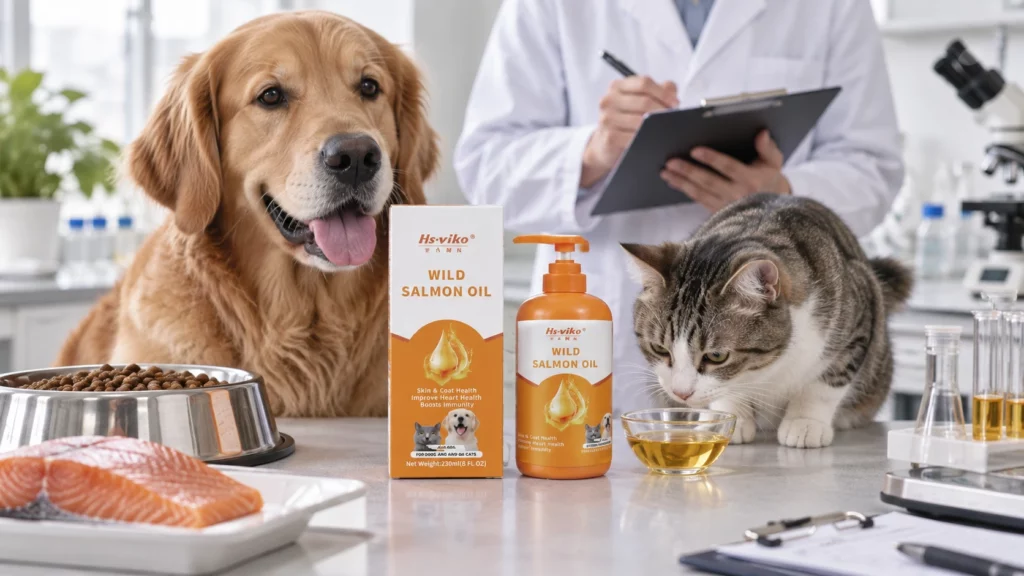
For a pet brand, a private label fish oil project succeeds when the formula, dosage form, label promise, and supply plan agree from the first brief. Fish oil for dogs and cats is not one universal item: buyers must decide whether a liquid, soft capsule, paste, or another format best fits the animal, serving routine, packaging, and market. HSVIKO offers customized fish oil soft capsules with private label and formula-development support. This guide explains the checks a brand buyer should complete before requesting samples or a quotation.
Write the brief before choosing a bottle or capsule size. State whether the product is for dogs, cats, or both; the intended life stage; the daily serving range; and the primary nutritional positioning. Fish oil products commonly center on omega-3 fatty acids, especially EPA and DHA. The brief should identify whether the brand wants a general fatty-acid supplement, a skin and coat product, or a broader daily wellness formula. Those are positioning choices, not permission to make disease-treatment claims.
The brief should also set practical boundaries: target pack size, serving method, flavor or odor limits, storage conditions, destination market, and expected opening quantity. A cat product may need a smaller serving and a format that mixes easily with food. A dog product may allow a larger daily volume or a puncturable capsule. Ask the formulator to explain what is fixed, what can be adjusted, and which changes require a new feasibility review.
Format affects administration, oxidation protection, packaging, and unit economics. Soft capsules hold oil-based ingredients in a sealed gelatin shell. HSVIKO describes the capsule format as suitable for fat-soluble nutrients, with precise dosing and the option to puncture the capsule and mix the contents into food. The format also needs cool, dark storage because heat can soften and stick the shells. Review the capsule format overview before comparing a quote with liquid alternatives.
Liquid fish oil allows flexible dosing and easy mixing, which can suit multi-pet households or brands that want a pump or dropper experience. It also puts more responsibility on the package for oxygen, light, leakage, and repeated opening. HSVIKO presents a separate liquid supplement format for flexible dosing. A paste or emulsified product may improve direct licking or portion control, but it introduces its own stability and filling questions.
A buyer should compare the amount of fish oil and the declared EPA and DHA, not only a percentage printed on a product sheet. The HSVIKO OEM product range lists fish-oil soft capsules at several oil concentrations, including 20%, 30%, 75%, and 90%, as well as entries that specify EPA and DHA ratios. Those figures are useful starting points for a product brief, but the final label values must be confirmed against the selected formula, serving size, test method, and market requirements.
Ask for a specification that separates the carrier oil from the active omega-3 content. Confirm the serving basis, net fill, acceptable variance, and whether the stated EPA and DHA values are minimums or typical results. If the brand plans a dog-and-cat line, decide whether one concentration can support both species or whether separate strengths will make the label and feeding directions clearer.
Fish oil is sensitive to oxygen, heat, and light, so stability is a supply-chain question as much as a formulation question. Ask how incoming oil is identified and released, how it is stored, and which oxidation-related tests are included in the quality plan. Request the finished-product specification, packaging compatibility rationale, storage statement, and retain-sample policy. For liquids, clarify headspace, closure, leak testing, and the expected behavior after opening. For soft capsules, clarify shell integrity, sticking risk, and the temperature limits used for transport and warehousing.
Do not accept a generic statement that the product is stable. A buyer needs the test list, the acceptance limits, and the point in the process where each check is performed. A certificate of analysis can support release decisions, but it does not replace a product-specific stability plan.
Private label does not transfer label responsibility away from the brand owner. Review the target market, species, ingredients, serving directions, warnings, and intended claims before artwork is approved. In the United States, use the FDA’s FSMA pet food guidance as a starting point for the food-safety questions your regulatory adviser and manufacturer must answer. Claims about supporting skin, coat, immune wellness, or balanced nutrition should match the evidence and the applicable animal-food framework. Avoid turning a nutritional product into a treatment claim through packaging language.
Request a review copy of the formula, ingredient statement, guaranteed analysis where applicable, feeding directions, and packaging text. Confirm that the product name, net quantity, lot coding, storage statement, and contact information can be carried consistently across the label and shipping case.
A strong supplier conversation moves from a sample to a repeatable process. Ask who owns formula changes, which production steps are performed in-house, how raw materials are traced, and what records accompany each batch. HSVIKO presents OEM, ODM, and private label support across several pet-supplement formats, including fish-oil capsules and liquids. The relevant question is whether the quoted fish-oil SKU has a documented specification and a clear approval path, not whether a factory lists many products.
Clarify the MOQ in units and in production assumptions. Different strengths, flavors, capsule sizes, labels, and pack configurations can create separate minimums. HSVIKO explains these drivers in its guide to MOQ factors. Ask whether the quote includes formula work, pilot samples, testing, printed packaging, filling, coding, and export documents. A lower unit MOQ may still be expensive if the packaging setup or custom testing is charged separately.
Send a concise RFQ that lets the supplier evaluate fit without guessing. Include:

The right private label fish oil for dogs and cats is the one whose active profile, format, packaging, claims, and production controls remain consistent from brief to batch. Compare EPA and DHA on a serving basis, treat oxidation control as a documented requirement, and choose a format that matches how each species will actually receive the product. HSVIKO can be evaluated as a fish-oil soft-capsule and pet-supplement OEM/ODM partner when its proposed formula, specification, testing plan, and MOQ fit the brand brief.
Possibly, but the serving size, palatability, packaging, and label directions must be reviewed for each species. A shared formula is useful only when it keeps the directions clear and practical.
Choose the format that best matches the intended serving routine and package promise. Liquids offer flexible dosing; soft capsules offer sealed portions and precise unit dosing. Stability and storage requirements should decide the final choice.
Confirm the ingredient statement, EPA and DHA basis, net fill, serving directions, warnings, storage language, lot coding, and every claim for the destination market.
Include species, format, target actives, pack size, market, claims, packaging, opening quantity, forecast, and required quality records so the supplier can quote a defined configuration.
For a technical fit check, share the species, format, target EPA and DHA levels, pack size, destination market, expected quantity, and label brief when you contact HSVIKO’s technical team.
Related Posts
U.S. Pet Supplement Labeling: An FDA and AAFCO Guide for Brands
30th October 2026
Fish Oil Softgels vs Liquid vs Emulsified vs Powder for Pets
29th October 2026






Contact Us