
U.S. Pet Supplement Labeling: An FDA and AAFCO Guide for Brands
30th October 2026
 admin
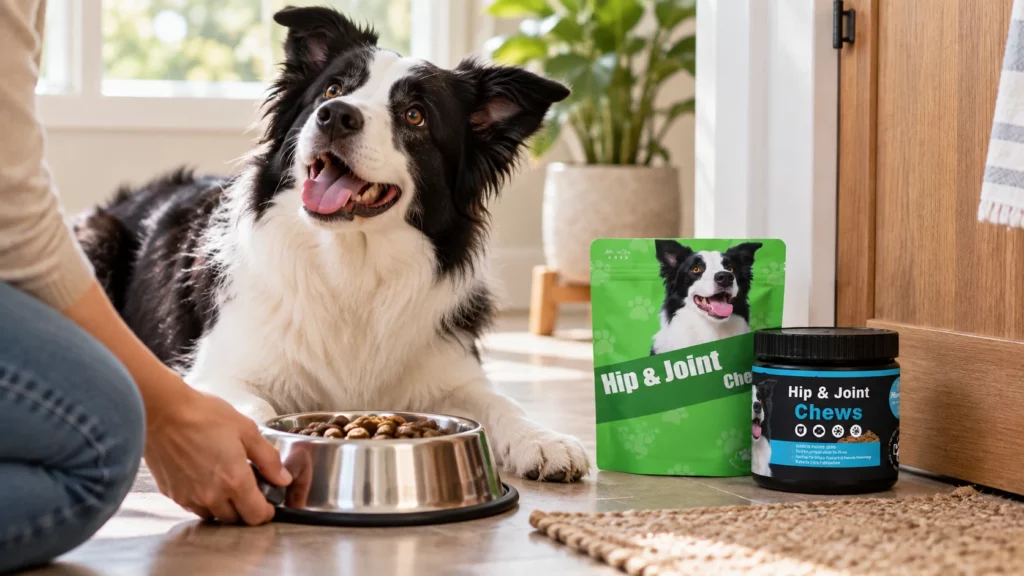
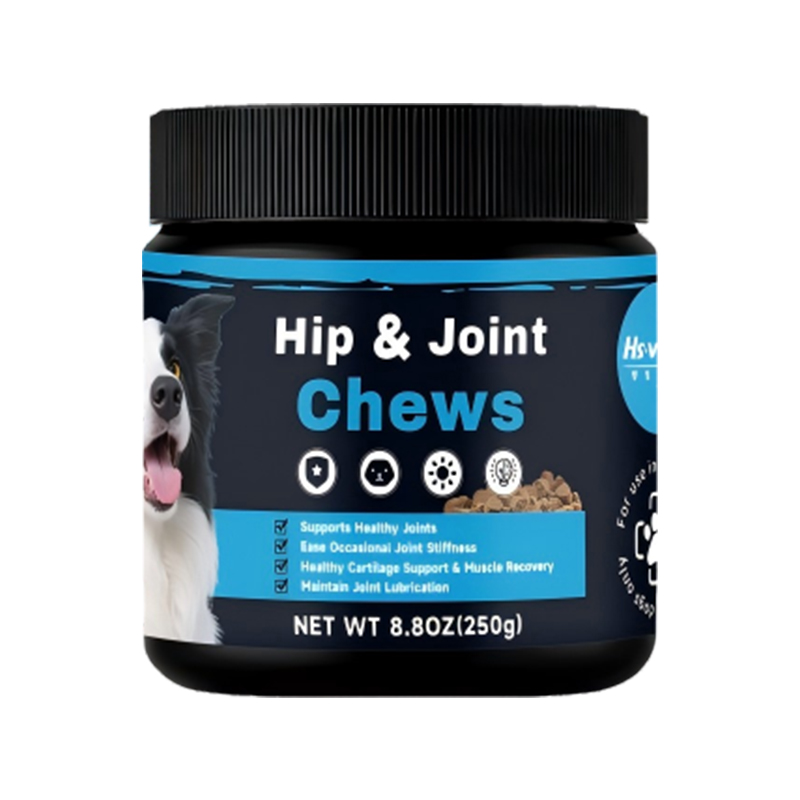
For a private label dog joint supplement, the right brief starts with the daily dose and the intended feeding routine, then works backward to the active ingredients, delivery format, package, and quality checks. Glucosamine, chondroitin, and MSM are common starting points for mobility formulas, but they do not automatically define one finished product. A brand may need a soft chew for treat-like acceptance, a tablet for a compact unit dose, a powder for food mixing, or a liquid for adjustable serving. The best choice is the one that keeps the formula practical, stable, and easy to use at the intended serving.
Hs・Viko develops pet supplements through OEM/ODM and presents a multi-format range. Its official product catalog is useful for comparing the available delivery systems before an RFQ, while the final ingredient levels, serving instructions, packaging, and market claims still need to be confirmed in the product specification.
Ingredient selection should answer a formulation problem, not simply repeat a popular label. Glucosamine is commonly used as a cartilage-support ingredient in dog mobility products. Chondroitin is often paired with it because the two ingredients address related structural and connective-tissue positioning. MSM, or methylsulfonylmethane, is frequently included as a sulfur-containing component in joint-support concepts. These descriptions are formulation roles, not a promise to diagnose, treat, or prevent disease. The final label language and use instructions must be reviewed for the destination market.
For procurement teams, the important questions are more specific: Which form of glucosamine is proposed? What is the declared amount per serving rather than only per kilogram of blend? Is chondroitin quantified separately? Does MSM fit the target serving size, flavor system, and stability plan? If a formula adds botanicals, omega-3 oils, hyaluronic acid, or minerals, what does each addition contribute to the product brief, and what new testing or storage risk does it introduce?
Ask for an ingredient specification, target serving, unit weight or volume, and expected label declaration before choosing the package. A supplier should be able to explain which values are fixed, which may vary by format, and which must be verified after pilot production.
The same glucosamine-chondroitin-MSM concept can behave very differently in each dosage form. Format is therefore a technical decision as well as a marketing decision. Use the following logic as a starting screen, then confirm the serving and stability evidence for the exact formula.
Soft chews are attractive when a brand needs a repeatable, treat-like routine. They can support flexible branding and direct feeding, but the active load must fit a reasonable chew size and texture. Flavor masking, moisture migration, heat exposure, oiling, clumping, and package sealing deserve early attention. If the product is aimed at picky dogs or households that mix supplements into meals, a soft granule that can be added to food may be more practical than a large chew. Hs・Viko’s product information describes soft granules as tender, mixable, and flexible in dosage, while also noting the need to manage temperature and opening conditions.
Tablets suit briefs that prioritize a defined unit dose, compact packing, and clean handling. They make the declared amount per tablet easy to communicate, but compression brings its own controls: powder flow, blend uniformity, weight variation, hardness, friability, and disintegration. A tablet may also be harder to feed directly, so the brief should state whether it will be crushed into food or given as a whole unit. That choice affects size, palatability, and consumer instructions.
Powders work when the caregiver can mix a measured serving into wet or dry food. They leave room for multi-ingredient blends and adjustable dosing, but they require good flow, particle-size control, blend uniformity, and moisture protection. A powder that separates during transport or clings to a scoop can undermine dosing confidence. Packaging, scoop design, serving instructions, and the time allowed after opening should be treated as part of the formula brief.
Liquids can fit adjustable dosing, fast dispersion, or dogs that resist solid formats. They may also accommodate oil-based actives that are difficult to place in a compact unit. The trade-offs include viscosity, phase separation, oxidation, microbial control, closure integrity, leakage, and dosing-device accuracy. Ask whether the formula is water-compatible, oil-based, or emulsified, and which storage conditions are required after opening. Liquid claims about faster absorption should not be used without appropriate evidence.
Before requesting samples, convert the concept into a short technical brief:

A useful companion to this article is Hs・Viko’s format-selection guide, which explains the general trade-offs among soft chews, tablets, powders, and liquids. The joint-supplement brief should go one step further by testing whether the active load, flavor, serving, and package work together in the chosen format.
A private label dog joint supplement supplier should be evaluated on the evidence it can provide for the exact SKU, not only on a broad product list. Confirm whether the program is a stock formula with branding, a modified formula, or a genuinely custom ODM project. Ask who owns the formula, what documentation accompanies each batch, how changes are controlled, and which packaging components are included.
Hs・Viko describes an OEM/ODM process that moves from an initial brief toward finished products. Review its OEM/ODM process to understand the intended discussion points, then ask for a format-specific proposal covering formula, serving, package, pilot, testing, artwork, and destination market.
For an RFQ, include the target species, active ingredients, preferred format, unit dose, pack size, expected quantity, flavor direction, storage conditions, and sales market. If the final format is undecided, request a comparison of two feasible options rather than asking for a generic quote. This makes differences in serving size, package cost, testing, and user instructions visible before the project is locked.
Glucosamine, chondroitin, and MSM can form a clear starting concept for a private label dog joint supplement, but the ingredients only become a workable product when the delivery format supports the dose and the daily routine. Soft chews emphasize acceptance, tablets emphasize unit-dose control, powders emphasize food mixing, and liquids emphasize adjustable delivery. Select the format from the formula and user behavior outward, then verify stability, packaging, testing, and label requirements with the manufacturing partner.
No. They are common formulation starting points, but the final combination depends on the product brief, target serving, market rules, and evidence supporting the intended claims.
There is no universal answer. Soft chews may simplify a treat-like routine, tablets can simplify unit counting, powders support meal mixing, and liquids support flexible dosing. Each requires its own stability and packaging checks.
Sometimes, but each version should be treated as a separate specification until serving, flavor, stability, and equivalence have been demonstrated.
Include the species, actives and target amounts, serving behavior, format, pack size, quantity, storage conditions, destination market, and any artwork or documentation requirements.
To compare a private label dog joint supplement brief with feasible formats, contact the Hs・Viko technical team with the species, glucosamine/chondroitin/MSM direction, target serving, preferred format, pack size, quantity, and destination market.
Related Posts
U.S. Pet Supplement Labeling: An FDA and AAFCO Guide for Brands
30th October 2026
Fish Oil Softgels vs Liquid vs Emulsified vs Powder for Pets
29th October 2026
Brand Buying Guide to Private Label Fish Oil for Dogs and Cats
22nd October 2026






Contact Us