
Importing Pet Supplements into South Africa: What Buyers Should Prepare
26th noviembre 2026
 admin
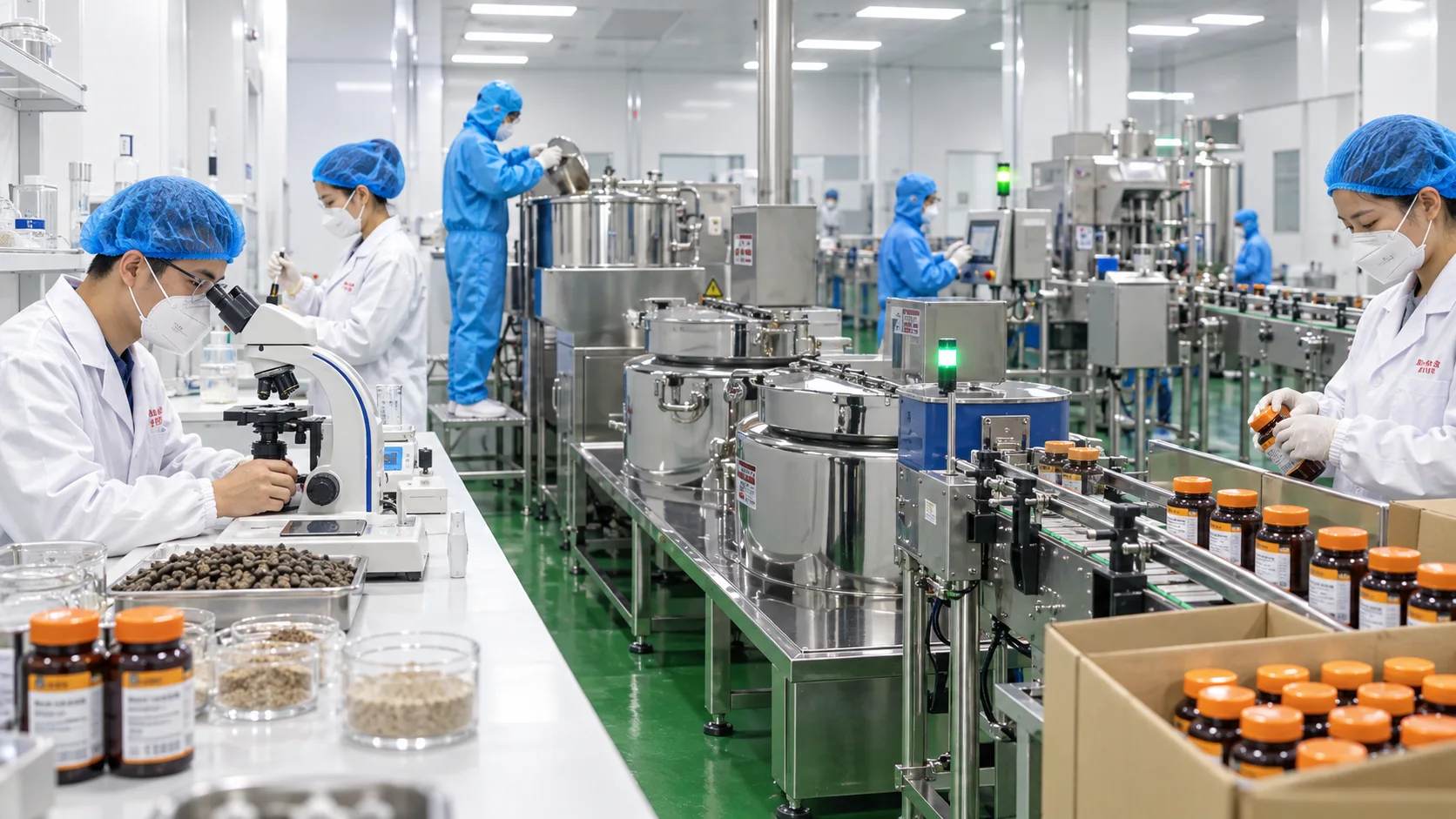
The pet supplement manufacturing process turns an idea into a repeatable product through a controlled sequence: define the brief, build a manufacturable formula, qualify materials, prove the process at pilot scale, manufacture the dosage form, test the batch, and release packed goods. The visible chew, powder, capsule, tablet, liquid, or paste is the final link in a chain that determines consistency, shelf life, traceability, and launch risk. Understanding that chain helps brand owners keep packaging and price decisions aligned with technical feasibility.
Manufacturing begins before any ingredient is weighed. The brand owner and formulation team define species, life stage, market, daily serving, dosage form, pack size, flavor limits, storage, and claim direction. The brief should describe intended support without disease-treatment language that could change regulatory status. In the United States, classification, ingredients, labels, and claims require market-specific review under federal and state frameworks.
For US planning, use the FDA FSMA material y guía de inicio AAFCO to frame counsel questions; a manufacturer or template label does not replace the brand owner’s review.
The formulation team then converts the brief into a controlled formula and bill of materials. Nutritional intent must fit real processing conditions: an active may be heat-sensitive, an oil may oxidize, a probiotic may lose viability in moisture, or a botanical powder may flow poorly. Serving size, palatability, ingredient interactions, and analytical limits must be considered together. Any processing aid, carrier, flavor, or proposed overage should have a documented purpose and be compatible with the destination market.
Dosage form is part of formulation, not a container chosen later. Hs·viko’s product catalog presents soft chews, powders, drops and liquids, gels, emulsified or paste-style products, fish oils, capsules, tablets, and small-pet premixes. That range gives a buyer several starting formats, but the final choice still depends on ingredient behavior, target serving, administration routine, packaging protection, and the equipment used for the quoted product.
Each incoming material needs an approved specification covering identity, grade, storage, shelf or retest period, and acceptance criteria. Depending on risk, the program may examine identity, assay, moisture, microorganisms, contaminants, oxidation, allergens, or other relevant attributes. Supplier documents and certificates of analysis support the decision, but they do not remove the need for risk-based verification. Materials should remain identified and controlled until the responsible quality function releases them for production.
Lot traceability starts here. Receiving records should connect supplier and internal lots, quantity, test status, storage, and batch use. That chain supports later assay, complaint, or packaging investigations. Substituting a similar ingredient without review can change potency, flow, taste, stability, or label accuracy even when its name appears unchanged.
A laboratory sample shows whether the concept can be made; a pilot batch shows whether it can be repeated on representative equipment. The team evaluates blend behavior, taste and texture, unit or fill weight, processing loss, packaging fit, and the practicality of the serving. Pilot records should capture order of addition, mixing time, temperature, moisture exposure, hold time, equipment settings, yield, and every approved adjustment. These observations become the starting parameters for the commercial batch record and scale-up plan.
The equipment and critical settings change by format, but the production logic remains consistent: dispense, prepare, blend, form or fill, check, and reconcile. A typical commercial sequence is:
The dosage form determines where the main process risk sits. Powders depend on particle size, flow, segregation control, and blend uniformity. Tablets add compression force, unit weight, hardness, and friability; capsules add fill accuracy and shell compatibility. Liquids, oils, gels, and emulsions need controlled dispersion, viscosity, pH where relevant, and protection against leakage or separation. Soft chews add mixing, forming, moisture, texture, and cooling controls. These differences affect equipment, sampling, packaging, and shelf-life evidence, so an RFQ should name the exact form instead of requesting a generic “supplement.”
Quality control is not one final laboratory result. It combines sanitation and production records, in-process observations, sampling, and finished-product tests that show the batch matches its specification. The appropriate panel depends on formula and format, but may include identity, potency or assay, microorganisms, moisture, physical attributes, unit or fill weight, pH, viscosity, oxidation markers, or seal integrity. A result that falls outside specification should enter a documented investigation, not be averaged away or accepted informally.
The release review should connect finished goods to raw-material lots, equipment and processing records, packaging components, test results, deviations, and approved disposition. Retain samples and clear lot coding support later checks. If a complaint occurs, that chain helps determine whether the issue arose from formulation, processing, packaging, storage, or distribution. Stability work must separately support the proposed shelf life and storage statement; a passing release test does not prove long-term performance.
Packaging protects the formula and communicates how it should be used. The container, closure, liner, sachet, pump, or seal should match the product’s sensitivity to light, oxygen, moisture, separation, and handling. During packing, the line should verify the correct component and artwork version, net quantity, seal or closure, lot code, date statement where applicable, and label legibility. Product identity, ingredient declaration, directions, warnings, and claims must be reviewed for the destination market before artwork is released.
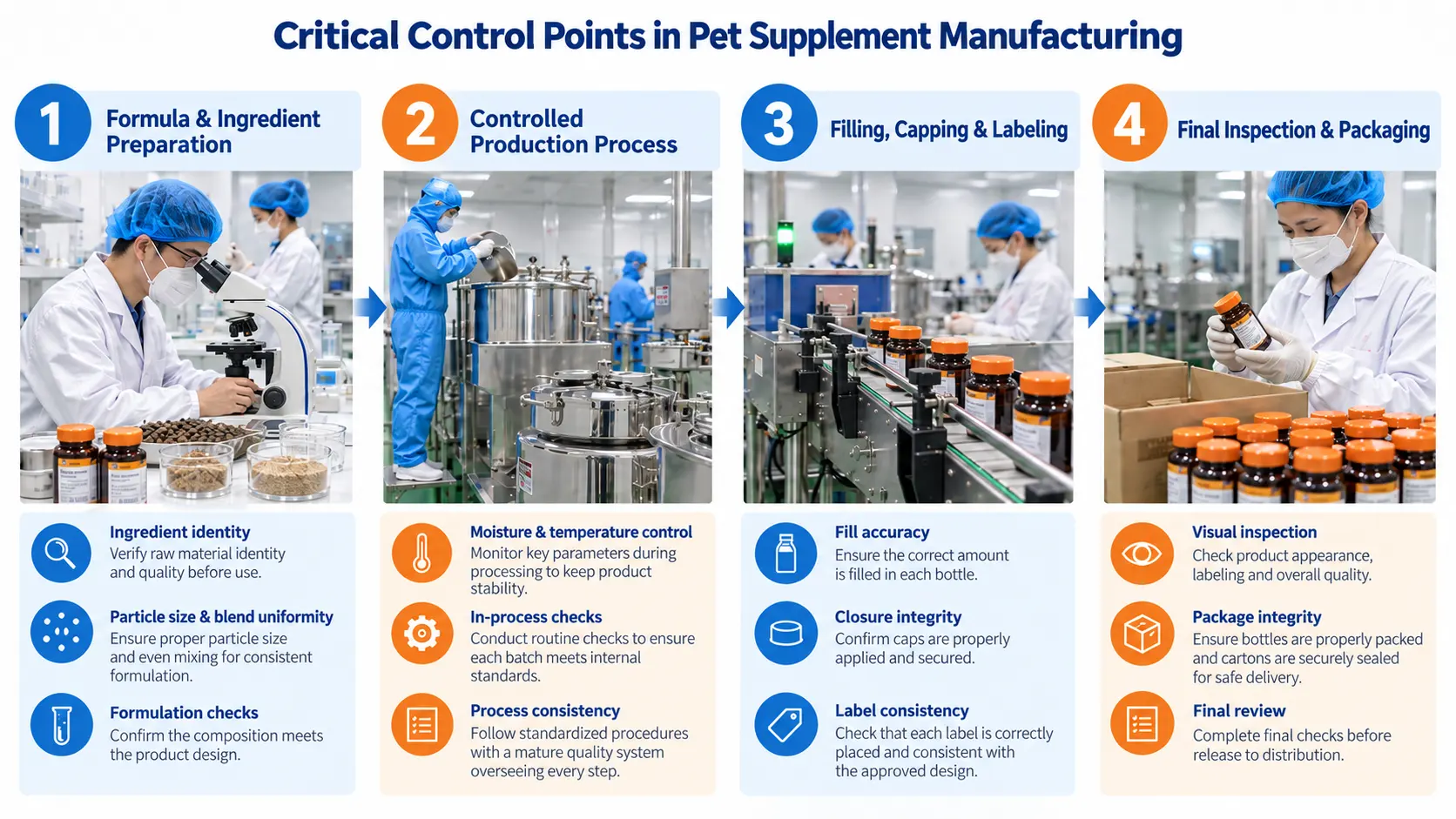
Packed goods should remain under defined conditions until release. Shipping orientation, case count, temperature exposure, and transit vibration can reveal problems a bench sample misses. The approval pack should include the final formula, finished specification, artwork, packaging specification, sample reference, change history, and release-document requirements.
A useful RFQ gives the manufacturer enough information to assess fit instead of guessing from a product name. Share the species, intended support, formula status, dosage form, daily serving, target pack, quantity range, destination market, claim direction, packaging preference, ingredient restrictions, and required documents. Ask the supplier to separate formulation, sample and pilot work, testing, artwork, packaging setup, production, freight, and reorder assumptions. This makes two quotations comparable and exposes decisions that are still open.
Hs·viko can be considered when the requested dosage form and project scope match its documented capabilities. Review the company’s OEM/ODM workflow, then use the manufacturer evaluation checklist to ask for product-specific evidence rather than relying on general claims.
From formula to finished product, pet supplement manufacturing is a controlled handoff between product definition, formulation, sourcing, process engineering, quality, packaging, and logistics. The strongest concept is not the most elaborate formula; it is the product that can be specified, produced, tested, packed, and replenished consistently. Define the brief, prove the process, and assign every approval before authorizing a full production run.
Create a controlled brief that defines the target animal, intended support, serving, dosage form, market, claims, package, and acceptance criteria.
A pilot tests ingredient behavior, process settings, yield, unit or fill weight, and packaging fit before the formula moves to commercial scale.
No. Powders, tablets, capsules, liquids, emulsions, gels, and soft chews require different equipment, in-process controls, packaging, and stability evidence.
The panel depends on the formula, format, ingredients, and market. It may include identity, assay, microorganisms, moisture, physical checks, fill weight, pH, viscosity, oxidation, or seal integrity.
Send the species, intended support, formula status, dosage form, serving, pack size, order range, destination market, claims, packaging, and required documents.
When your brief is ready, contact the Hs·viko technical team with the species, intended support, formula status, dosage form, serving, pack size, quantity range, destination market, and testing or packaging requirements needed for a fit check.
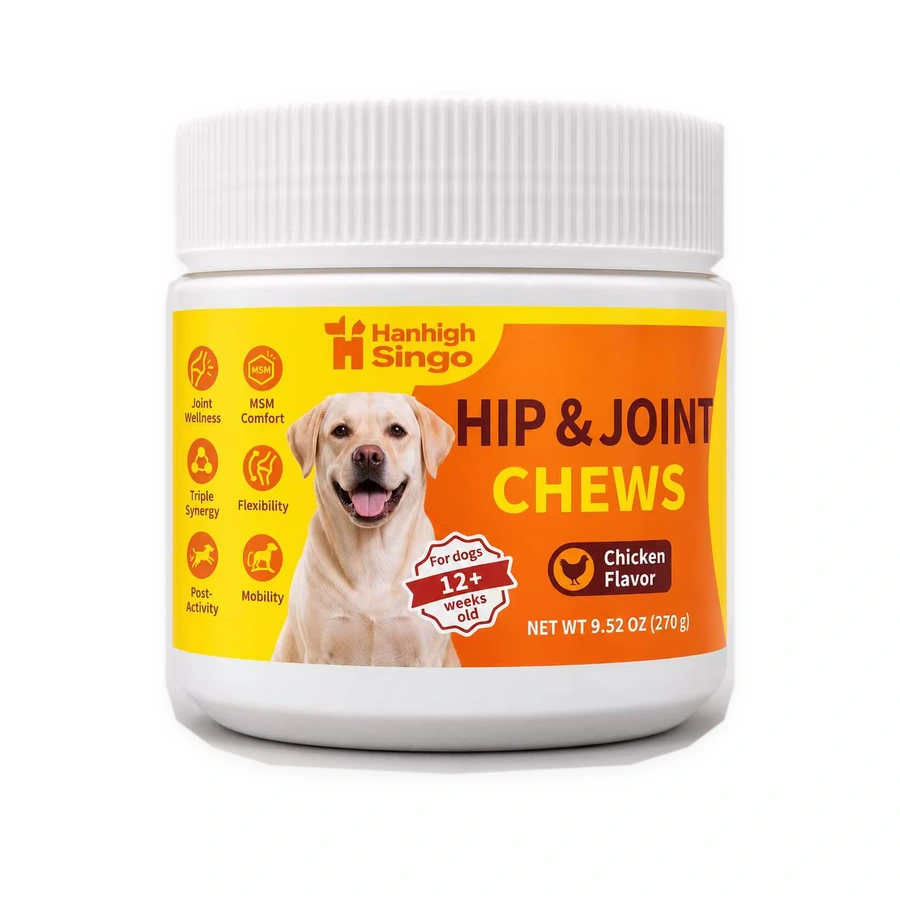
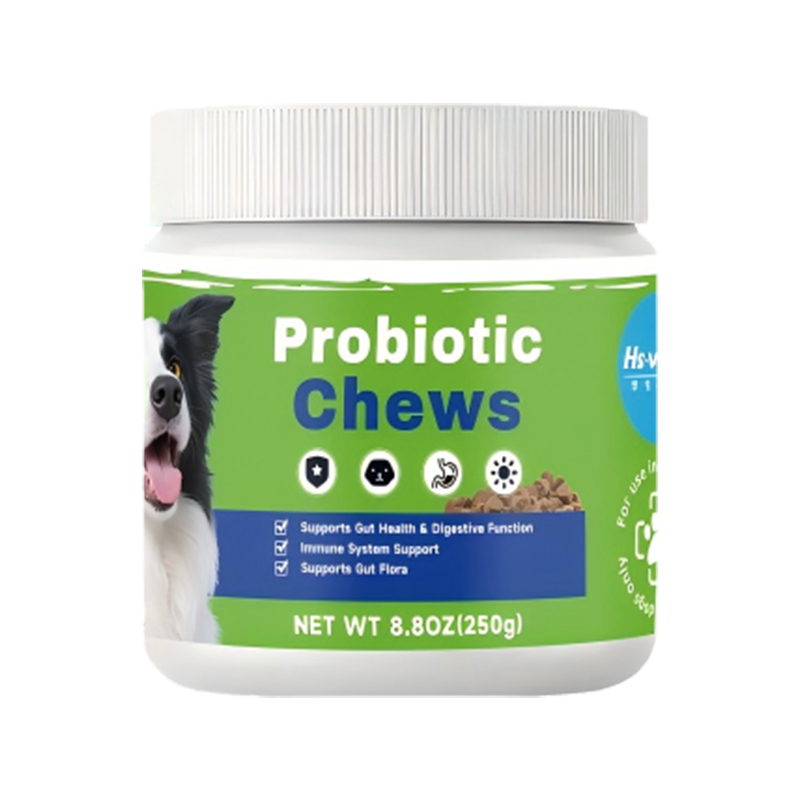
For a probiotic powder brief, define strain identity, CFU per serving, the claim time point, carrier and packaging. For a joint-support soft chew, compare ingredient load, texture, flavor and unit weight. Hs·viko product-development materials provide both examples, showing how one manufacturing workflow can require different sample and specification decisions for each product.
For brand buyers, turn these considerations into a product brief: target market, intended species, formulation, format, serving measure, packaging and order plan. Hs·viko supports OEM/ODM discussions across soft chews, tablets, capsules, powders, liquids and pastes. A consistent brief makes it easier to compare samples and quotations for the same product concept.
Entradas relacionadas
Importing Pet Supplements into South Africa: What Buyers Should Prepare
26th noviembre 2026
How to Plan a Private Label Pet Supplement Manufacturing Timeline
20th noviembre 2026
How to Compare Pet Supplement Manufacturers in China and the United States
19th noviembre 2026





Contáctenos