
Importing Pet Supplements into South Africa: What Buyers Should Prepare
26th novembre 2026
 admin
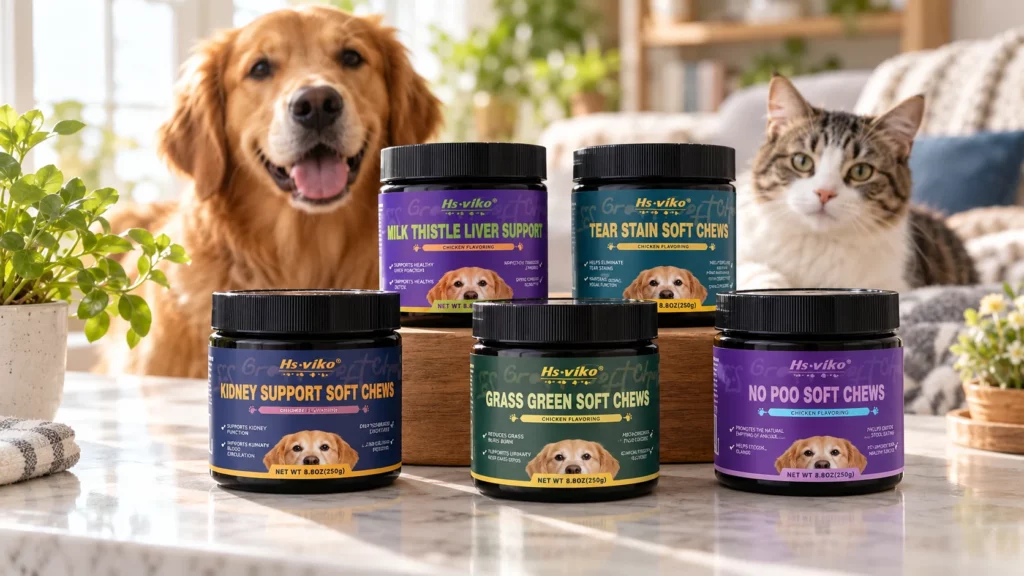
The right pet supplement package is the one that protects the formula through its expected use, makes the intended dose practical, and fits the customer’s storage and purchase habits. Bottles and jars suit many products used over several servings; pouches and sachets can support flexible or portioned formats; droppers and tubes help deliver liquids and pastes. Selection should begin with the dosage form and its sensitivity, then account for opening frequency, dispensing, shipping, labeling, and line compatibility.
Before comparing package shapes, define what the product is and how an owner will use it. A dry tablet, soft chew, powder, oil, liquid, and paste do not present the same filling, dosing, or after-opening needs. Ask how much is given per serving, whether the package is opened daily or used once, whether the product is poured, scooped, squeezed, or counted, and how long it may remain in use after opening.
Then identify the formula’s relevant sensitivities. Moisture, oxygen, light, heat, oil migration, aroma, or leakage may matter depending on ingredients and formulation. These are not solved by choosing a container name alone: the package material, closure, seal, headspace, and storage instructions all contribute. Confirm compatibility and shelf-life expectations with product-specific testing and the applicable quality process.
A useful first pass is to map each dosage form to its dispensing task. Tablets and capsules are counted; powders are measured or portioned; liquids are poured or metered; pastes are squeezed; soft chews are taken as individual pieces. Packaging should make that task repeatable without making the product difficult to protect or manufacture.
Bottles are a familiar choice for tablets, capsules, oils, and liquid supplements. A rigid body can be convenient to store and label, while a suitable neck and closure can support pouring or controlled dispensing. For dry units, consider whether users need to retrieve one piece at a time and how the package will be reclosed between servings. For liquids, evaluate the opening, pour rate, leakage risk, and whether a separate measuring device is required.
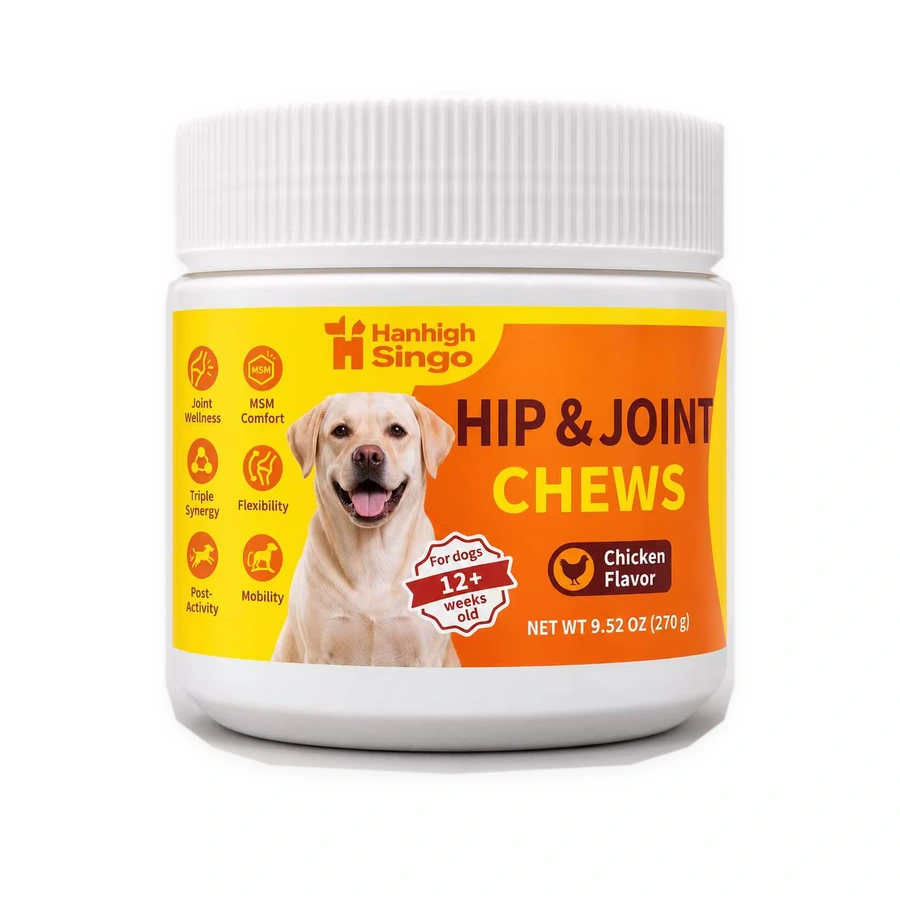
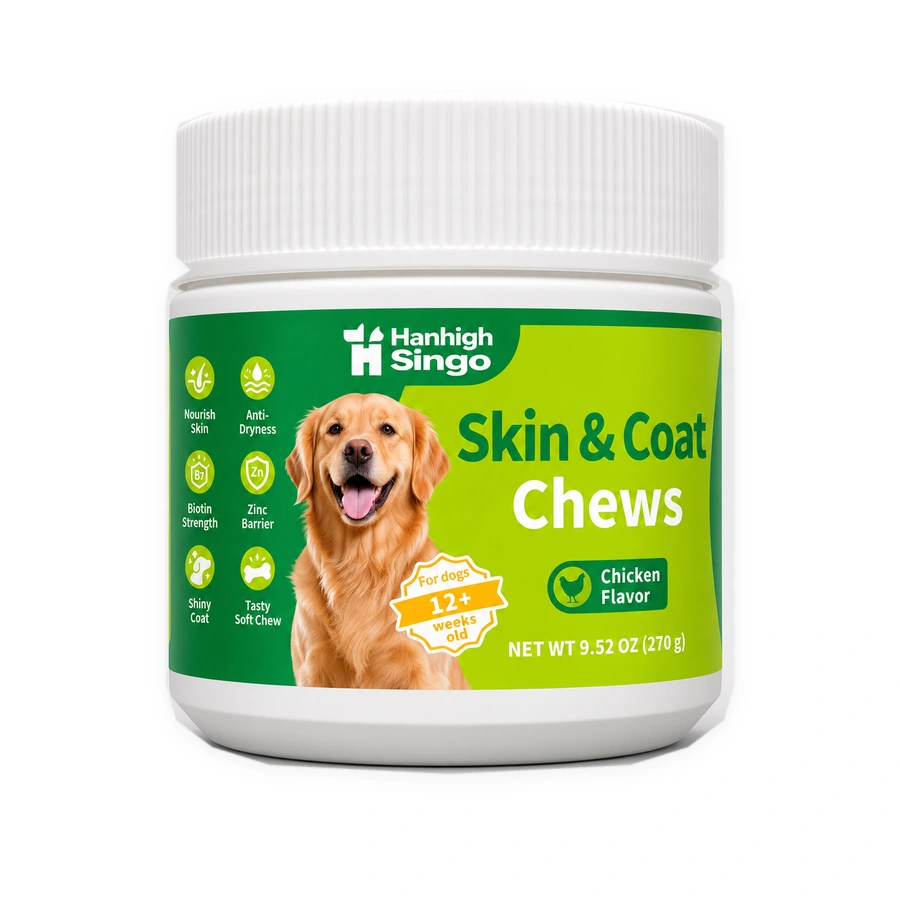
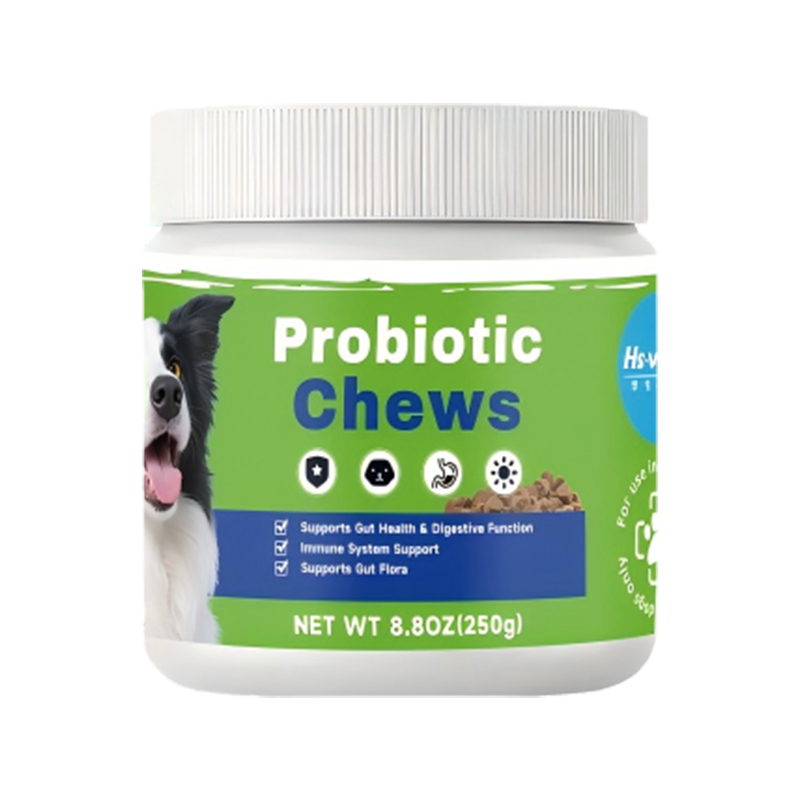
Jars offer a broad opening that can make retrieving larger pieces or using a scoop easier. They may suit soft chews, granules, or powders when the package is opened repeatedly. A wider mouth, however, exposes more product during use and can make spills more likely. Users may also put fingers or a scoop into the contents, so the label should give clear handling and closure instructions.
Check how the jar, inner seal, and lid work together. The package should close consistently after the first opening, and the opening should fit the intended dispensing method. Hs·viko’s catalog includes soft-chew products shown in jars; see the verified Hs·viko product range for the dosage forms currently presented. That example does not establish that one jar configuration is suitable for every formula.
Pouches can reduce rigid-pack volume and provide a broad printable surface. Depending on the structure and closure, a pouch may be considered for powders, soft chews, or other products that need multiple servings. The key questions are whether it can stand or store as intended, whether the contents can be poured or scooped cleanly, and whether the zipper or other reclosure remains usable after repeated opening.
A flexible pack is not automatically a high-barrier pack. Barrier needs depend on the formula, material structure, seal design, and distribution conditions. Confirm the proposed laminate or film, seal integrity, and compatibility with the product rather than relying on the word “pouch.” A pouch can be a poor fit when contents are difficult to retrieve, the reclosure is unreliable, or the pack is repeatedly exposed to humid conditions.
Sachets package a defined amount in a single-use format. They can make portioning straightforward, support sampling, or separate servings for travel. They are commonly evaluated for powders, liquids, and pastes, but the filling process, seal, and material must be suitable for the specific product. A sachet also needs enough space for required label information, either on the pack or through an outer carton.
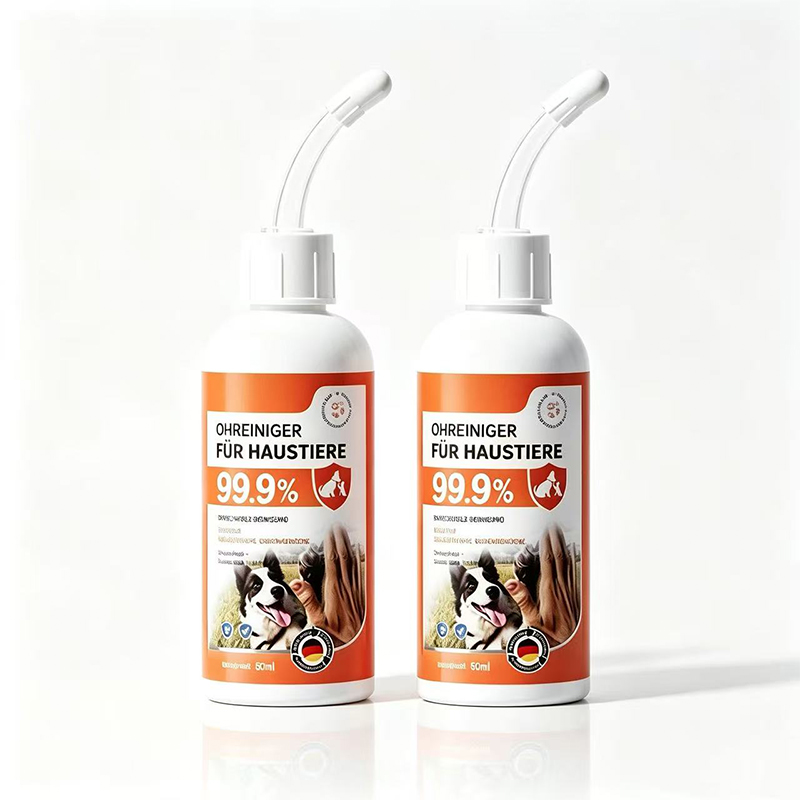
A dropper assembly can help dispense a liquid in measured increments when the formulation and directions call for it. Review the dropper’s capacity, graduations, material compatibility, and ease of cleaning or replacement where relevant. Viscosity and user technique can affect the amount delivered, so dosing accuracy should be checked using the actual formula and intended instructions.
Tubes allow users to squeeze out a portion and can be useful for viscous pastes or gels. The opening and cap should make the product easy to dispense while limiting mess and unwanted exposure between uses. Tube fill, product flow, and the amount remaining at the end of use all affect customer experience. Ask whether the formula separates, settles, or changes flow under expected storage conditions.
Hs·viko presents paste products in tubes, including formats described on its page for tube-packaged pastes. Confirm the actual tube, capacity, and storage instructions for the product being developed.
Use the format as a starting point, then check the actual dispensing task. Counted tablets or capsules may favor a bottle or jar; a bulk powder might use a jar or reclosable pouch; a liquid may need a bottle with a pour insert or a validated dropper; and a paste may be dispensed from a tube. Single-serving sachets can be considered when portion control or sampling is central. Hs·viko lists tablets, capsules, powder products, liquids, soft chews, and pastes in its product information, but packaging selection remains formula- and specification-dependent.
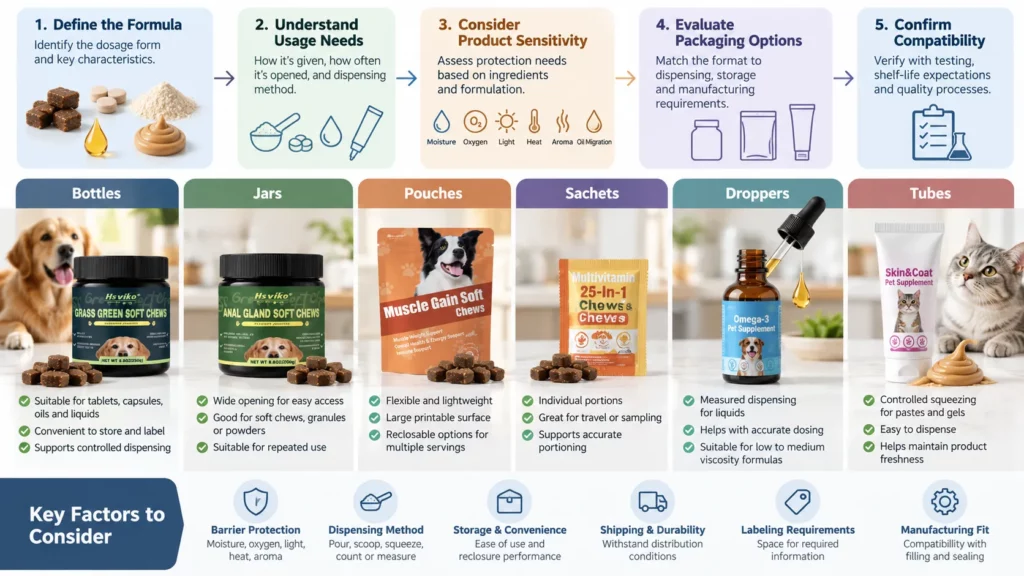
Once a candidate format is chosen, confirm the package at the system level. Review the container or film, primary seal, closure, dispensing component, label, and any secondary carton. Check fit with the filling method and line, pack orientation, sealing parameters, inspection method, and shipping configuration. A format that is convenient for consumers still needs a repeatable, controllable production process.
For product protection, specify the risks that matter and how they will be evaluated. Depending on the formulation, this can include seal integrity, leakage, moisture or oxygen exposure, light exposure, compatibility, and stability over the intended shelf life. Avoid generic assumptions such as “airtight” or “moisture-proof” unless the complete package has been validated against a defined requirement.
A useful request for quotation or fit review includes the dosage form, formula behavior, target serving and pack count, preferred package style, storage conditions, distribution route, and expected use after opening. Share a drawing or reference sample if available. Ask the supplier to identify the proposed material and closure system, available sizes, filling and sealing assumptions, testing needed, and any constraints that could affect labeling or consumer handling.
Hs·viko’s published range covers several pet supplement dosage forms, which makes format-to-product discussion relevant during development. To assess a specific project, share the formula type, target dose, pack quantity, preferred format, storage and distribution conditions, and any drawings or reference samples when you contact Hs·viko.
Choose pet supplement packaging by starting with the product and its dispensing task, then confirming protection, usability, label space, and production fit. Bottles, jars, pouches, sachets, droppers, and tubes each solve different handling problems; none is a universal answer. Test the complete package with the intended formula and use conditions before approving a specification.
It depends on serving method, moisture sensitivity, opening frequency, and dispensing preference. Compare a jar, reclosable pouch, or single-serving sachet, then verify material, seal, and usability with the actual powder.
They can be considered for a defined single serving if the formula, filling process, seal, opening method, and labeling plan are compatible. The selected pack should be evaluated with the actual liquid.
Consider a dropper when the liquid and dosing instructions call for measured dispensing. Confirm the graduations, material compatibility, delivered amount, and leakage performance as a complete system.
Prepare the dosage form, target serving and pack count, formula sensitivities, storage and distribution conditions, preferred dispensing method, artwork or label needs, and any drawing or sample that defines the desired fit.
Related Posts
Importing Pet Supplements into South Africa: What Buyers Should Prepare
26th novembre 2026
How to Plan a Private Label Pet Supplement Manufacturing Timeline
20th novembre 2026
How to Compare Pet Supplement Manufacturers in China and the United States
19th novembre 2026





Contactez-nous