

How to Start a Private Label Pet Supplement Brand in USA
-
 admin
- 24th سبتمبر 2026
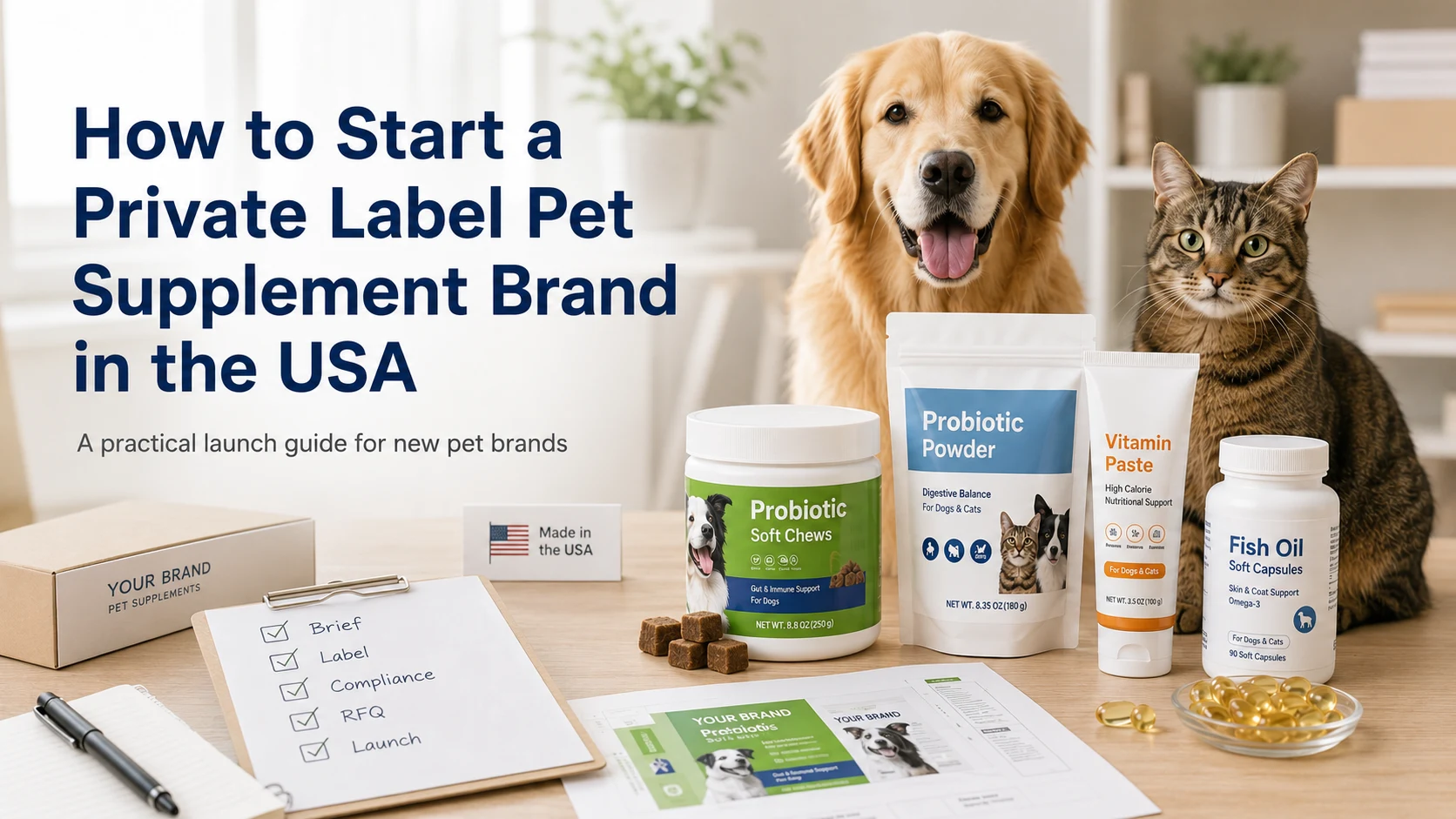
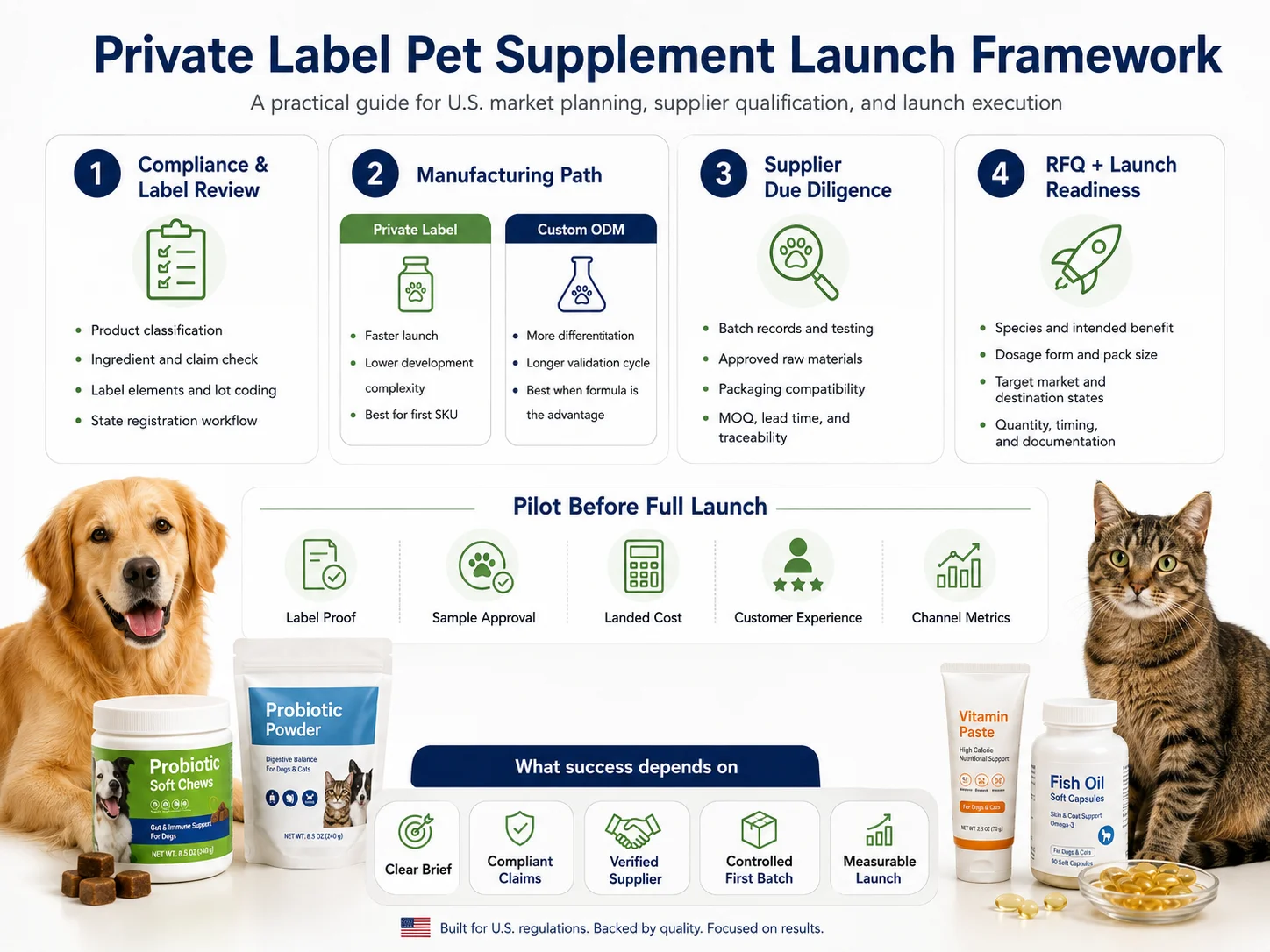
Starting a private label pet supplement brand in the USA is a product-and-compliance project, not simply a packaging exercise. Define one customer problem, select a defensible format, verify ingredients and claims, qualify a manufacturer, and launch a controlled first batch. That sequence protects cash, shortens revisions, and gives buyers a clear reason to trust a new label.
Define the commercial brief before choosing a formula
Write a one-page brief before speaking with factories. Name the primary buyer (for example, a specialty retailer, groomer, subscription business, or direct-to-consumer store), the pet and life stage you serve, the problem the product is intended to support, the preferred delivery format, and the channel where it will be sold. This prevents the common error of selecting an ingredient list that does not fit the customer, price point, or buying routine.
- Customer: who buys, who uses the product, and what evidence they expect.
- Positioning: one primary benefit stated as support, not a disease-treatment promise.
- Format: serving behavior, palatability needs, portability, and storage conditions.
- Commercial limits: target price, landed-cost ceiling, opening quantity, reorder point.
Validate demand and select a launch product
Use US search results, retailer shelves, veterinary nutrition discussions, and customer interviews to map recurring needs. Look for gaps in format, flavor, pack size, or audience rather than copying a crowded claim. A useful first product is easy to explain in one sentence, has a repeat-purchase reason, and can be supported by a stable specification.
- Choose a single hero SKU for the first production run; add extensions after repeat demand is visible.
- Keep the promise specific enough to measure through reviews, repeat orders, or retailer feedback.
- Confirm that the intended ingredients and format are practical for the target animal and serving routine.
Map US regulatory and label requirements before design
Start with the animal-food framework and verify the classification of every ingredient, additive, and claim with qualified regulatory help. The FDA’s pet food guidance explains that animal foods must be safe, produced under sanitary conditions, free of harmful substances, and truthfully labeled; it also describes ingredient and labeling expectations.
Treat state registration and label review as a separate workstream. AAFCO startup resources note that local, state, and federal rules can all apply, and that exact requirements may differ by state even when model language is widely used. Before artwork is finalized, confirm the product identity, net quantity, business name and address, ingredient order by weight, feeding directions, warnings, lot coding, and any state-specific filing.
Keep claims conservative until substantiation is documented. Treatment or prevention language can change the regulatory posture, and softer phrases should still match the formula, serving level, and available evidence. Review the label, website copy, and marketplace listing together.
- Create a claim matrix: claim, supporting evidence, required disclaimer, and approving reviewer.
- Track the destination states and channels because registration and marketplace rules can vary.
- Keep approved artwork, specifications, test reports, and revision history in one controlled folder.
Choose private label or custom ODM manufacturing
Private label is usually the simpler starting path when speed, a proven format, and a manageable first order matter most. Custom ODM is stronger when a distinctive formula, delivery format, or target use case is central to the brand story. Do not choose on price alone: compare formulation ownership, minimum order, development rounds, testing responsibilities, packaging setup, and the time required for label approval.
Hs·viko presents both OEM/ODM manufacturing and custom formulation R&D, so a buyer can discuss a standard starting point or a more tailored brief. Review the Hs·viko ODM/OEM program to see which path fits the product concept, then ask for a written scope that separates included work from optional work.
- Use private label when the customer insight is in branding, channel, or merchandising rather than a novel formula.
- Use custom ODM when the formula itself is the differentiator and you can support a longer validation cycle.
- Document who owns artwork, formula changes, test data, and future reorder specifications.
Choose a manufacturing partner you can audit
Supplier due diligence should produce evidence. Ask how raw materials are approved, batches are identified, deviations are handled, and a recall would be traced. Request representative specifications and lot documents where appropriate; the exact test panel depends on the formula and format.
Hs·viko lists GMP-standardized production, full-package design solutions, global export compliance and customs clearance, plus warehousing, fulfillment, and factory-audit support. Those service categories are useful checkpoints, but the commercial team should still confirm the exact facility, product scope, documents, and responsibilities for the proposed SKU. Review the full OEM/ODM service scope during the RFQ.
- Quality system: batch records, sanitation controls, deviation and complaint procedures.
- Ingredient control: approved suppliers, identity checks, storage, and allergen handling.
- Testing: release criteria, stability or shelf-life approach, and access to lot-specific results.
- Packaging: material compatibility, seal integrity, coding, case configuration, and artwork proofing.
- Operations: minimum order, lead-time assumptions, logistics handoff, and reorder terms.
Pilot the pack, economics, and customer experience
Before a full run, test the complete customer journey: label readability, opening and dosing, storage, shipping protection, and the instructions a first-time buyer sees online. Calculate landed cost from formula, packaging, setup, freight, duties where applicable, warehousing, fulfillment, marketplace fees, and expected waste. A gross-margin model is only useful when these costs are visible.
- Approve the final label proof only after regulatory, commercial, and operations reviewers sign off.
- Set acceptance criteria for appearance, fill weight, seal, coding, and shipping condition.
- Reserve working capital for a second order, artwork changes, and channel-specific inventory.
Launch through a measurable channel plan
Choose one primary route to market for the first 90 days. Build sales materials from the approved claims matrix, then track conversion, repeat purchase, customer questions, returns, and complaints by lot. This separates product, messaging, serving, and fulfillment problems.
For startups and e-commerce sellers, Hs·viko describes a dedicated solution path that can help frame the conversation around product scope, packaging, and fulfillment. Explore the startup and e-commerce solution while keeping your own channel assumptions and compliance review in control.
Use an RFQ that speeds technical review
A focused RFQ lets a manufacturer answer the real question instead of guessing. Attach the commercial brief, target market, and any draft artwork, then request a response against the same fields.
- Product: species, life stage, format, serving concept, target pack size, and intended claim language.
- Formula: private-label reference or custom objectives, ingredient constraints, flavor, and allergen requirements.
- Quality: specifications, testing plan, batch documentation, shelf-life approach, and sample process.
- Packaging: container, closure, label dimensions, case pack, coding, and artwork responsibilities.
- Commercials: minimum order, setup charges, payment milestones, freight assumptions, and reorder terms.
- Compliance: destination states, export documents, and the party responsible for final label review.

الخاتمة
A successful US private label pet supplement launch is built through disciplined decisions: a narrow customer problem, a defensible first SKU, compliant claims, documented supplier controls, and a pilot that tests the full customer experience. Private label can provide a practical entry point, while custom ODM becomes valuable when a proven insight justifies deeper development.
Hs·viko can be evaluated as a manufacturing partner when its OEM/ODM, formulation, packaging, compliance, and fulfillment capabilities match your brief. Prepare the RFQ with species, format, target quantity, destination states, and intended channel before you request a quote.
الأسئلة الشائعة
Do I need FDA approval before selling a pet supplement?
Do not assume a pre-market approval path. Confirm the product classification, ingredient status, label, claims, and state requirements with qualified regulatory support before sale.
Is private label or custom formula better for a new brand?
Private label usually reduces development complexity; a custom formula can create stronger differentiation. Compare evidence, order size, cash flow, and timeline rather than choosing by label alone.
How many products should I launch first?
One hero SKU is often easier to validate, explain, and replenish. Add products after repeat demand, operational capability, and customer feedback support the expansion.
What should I send to a pet supplement manufacturer?
Send the species, use case, format, pack size, target market, claim direction, quantity, packaging needs, destination states, and any testing or documentation requirements.
When your brief is ready, contact the Hs·viko technical team with the formula direction, species, format, dimensions or pack size, target quantity, operating or shipping conditions, destination states, and application details needed for a fit check.
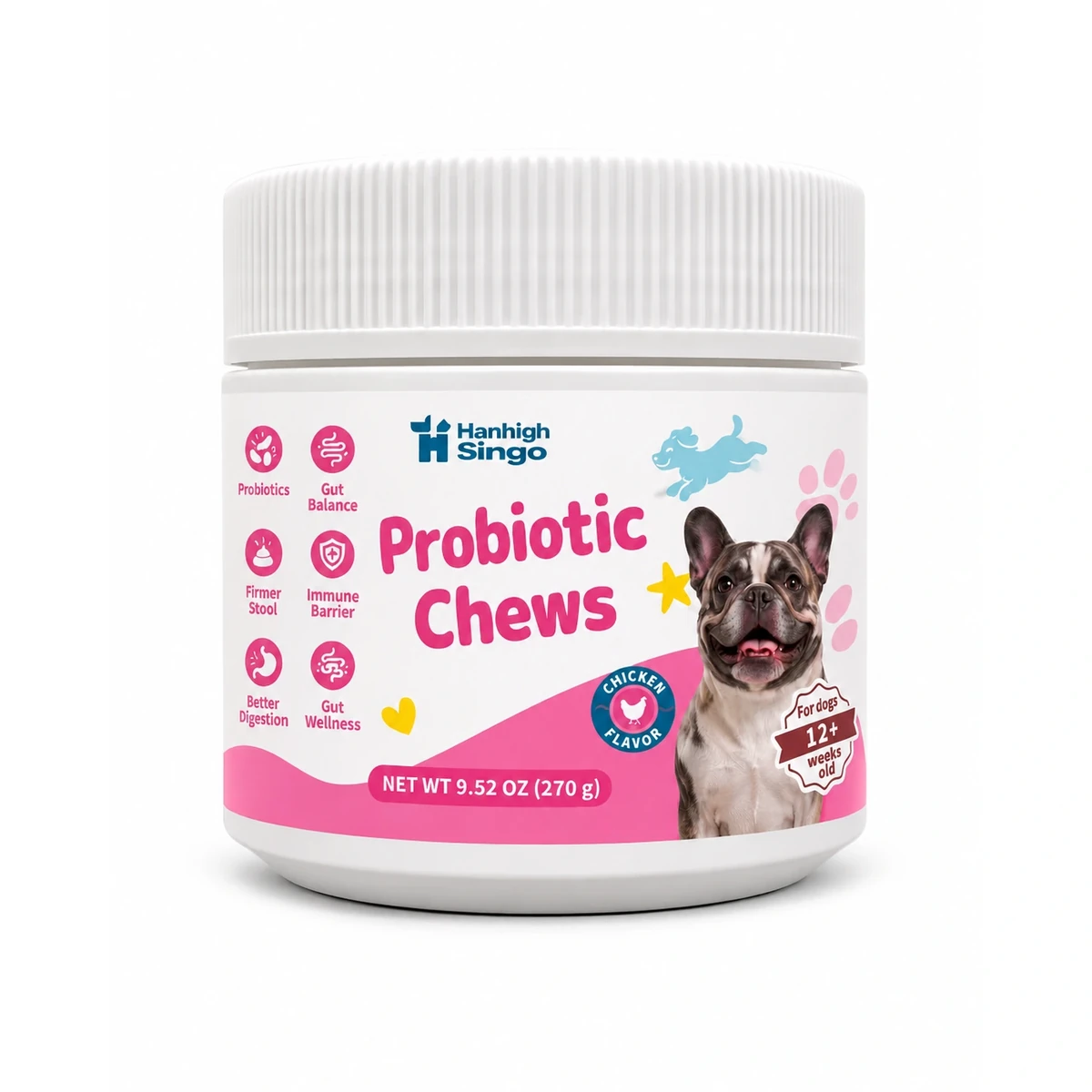
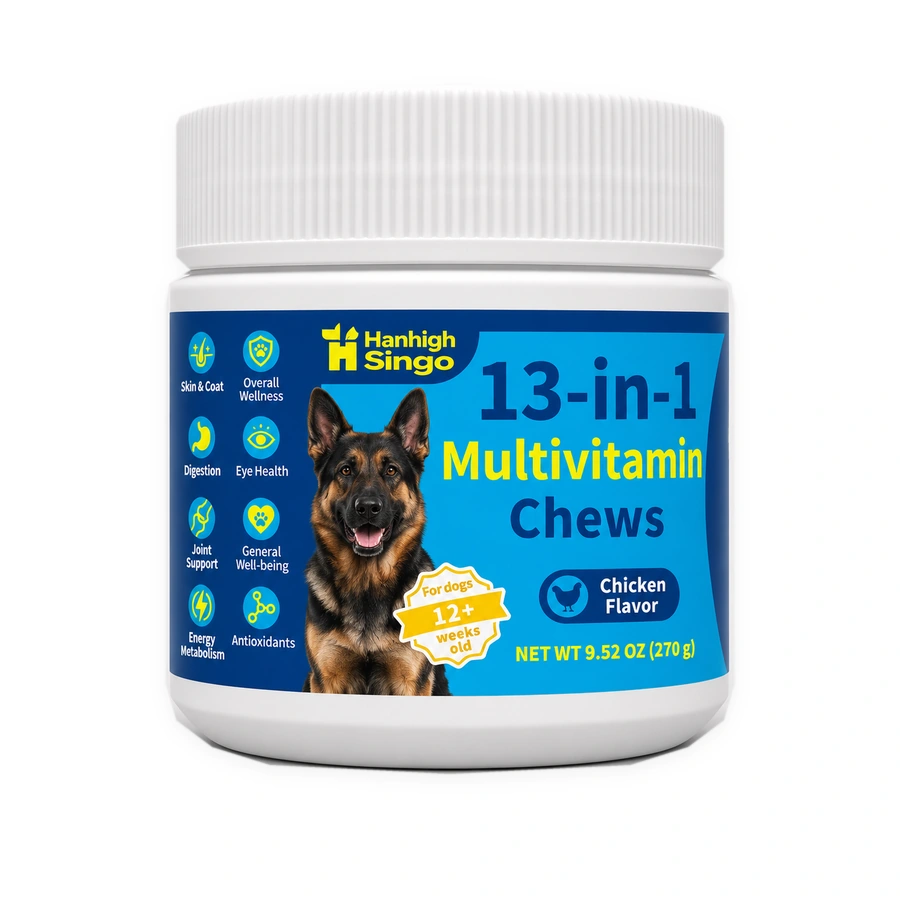
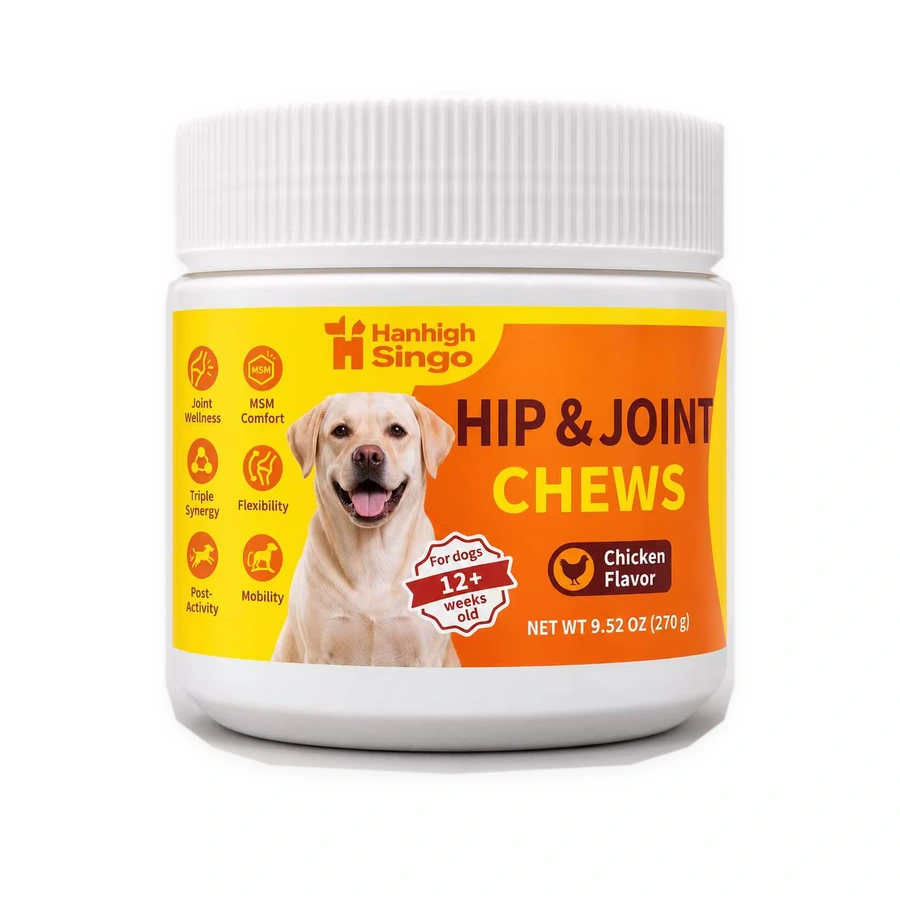
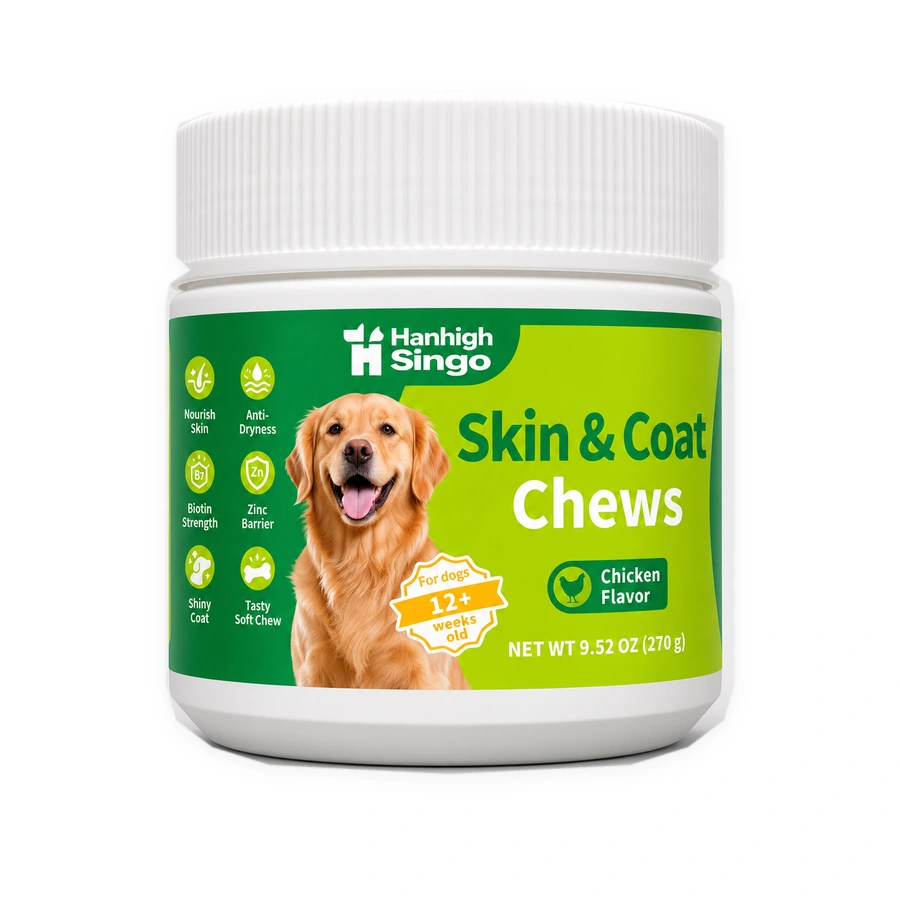
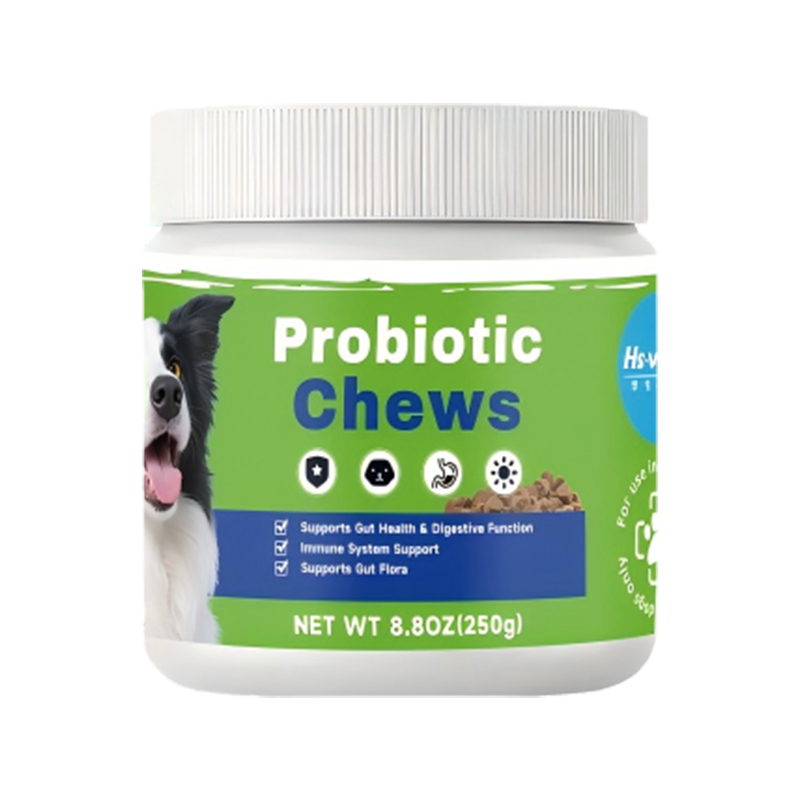
Choose the first product around the brand’s intended nutritional position, animal group, serving routine and sales channel. Hs·viko materials include probiotic, joint, vitamin, fish-oil and paste concepts. Compare the available formulation and packaging routes before selecting the initial SKU, and prepare the label brief and first-order requirements alongside the manufacturing request.
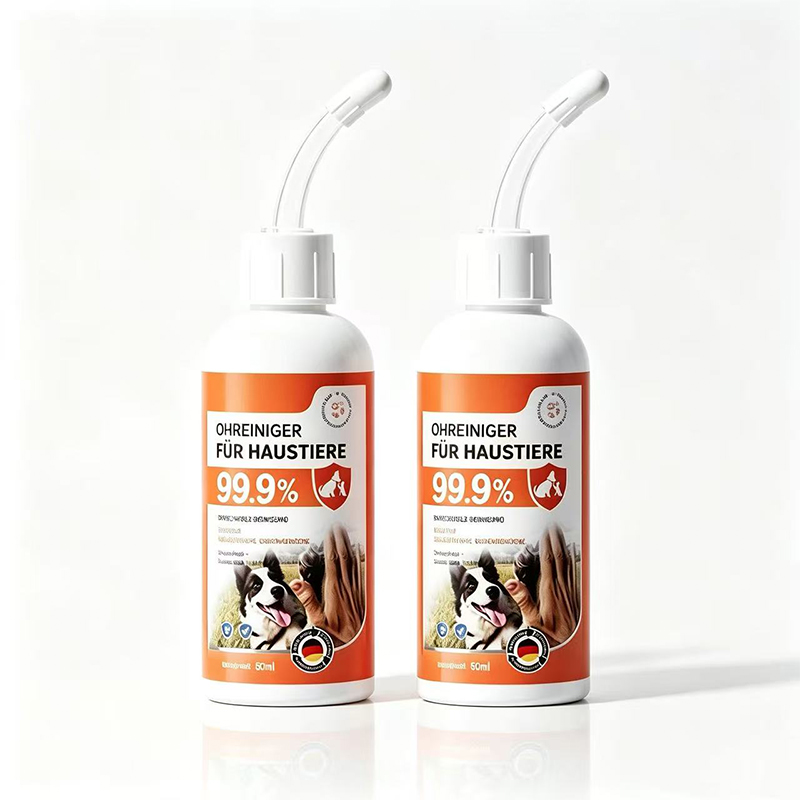
For brand buyers, turn these considerations into a product brief: target market, intended species, formulation, format, serving measure, packaging and order plan. Hs·viko supports OEM/ODM discussions across soft chews, tablets, capsules, powders, liquids and pastes. A consistent brief makes it easier to compare samples and quotations for the same product concept.

admin
الملف الشخصي








اتصل بنا